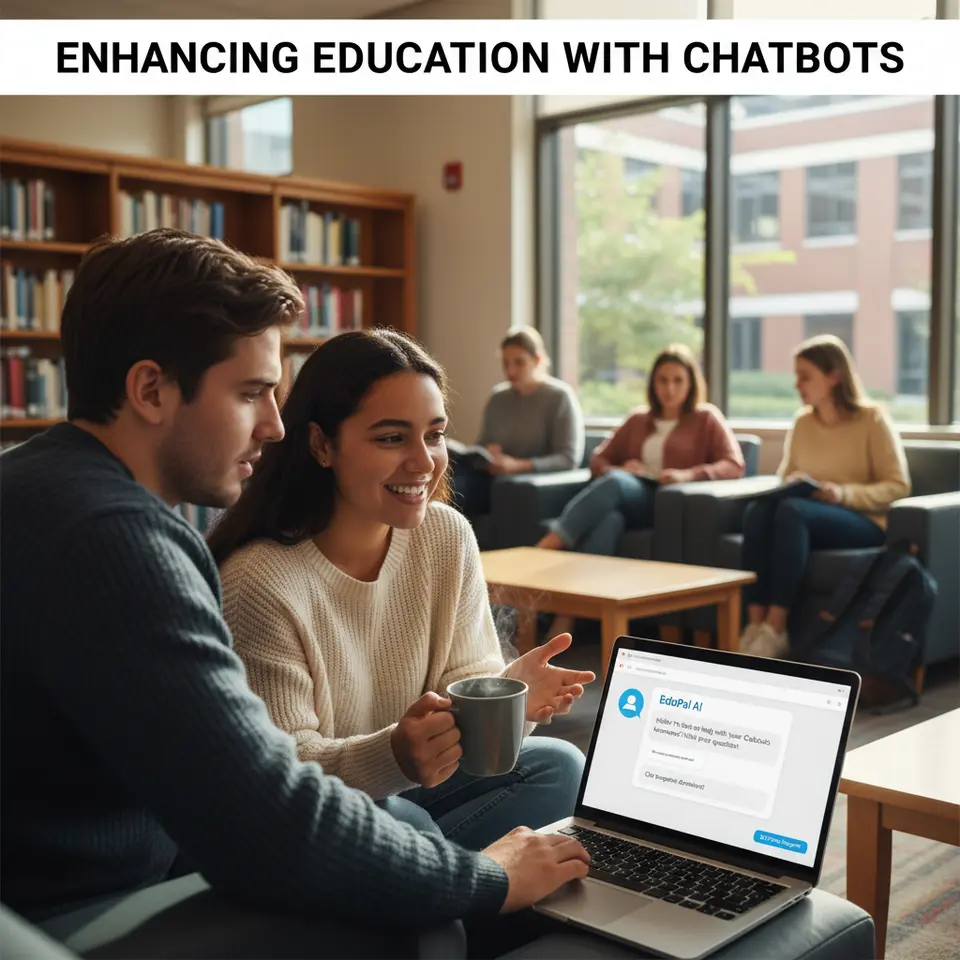
In today’s digital landscape, educational institutions are seeking innovative methods to enhance student engagement and streamline support services. One of the most promising advancements this year (2026) involves the deployment of educational chatbots—AI-driven virtual assistants that deliver round-the-clock guidance and personalized interactions. As class sizes grow and academic programs diversify, students often require immediate answers to common questions outside traditional office hours. Educational chatbots bridge this gap by offering rapid responses, tailored learning pathways, and seamless integration with existing systems.
Currently, more schools and universities recognize that leveraging artificial intelligence not only boosts operational efficiency but also fosters a more interactive learning environment. Whether embedded within a campus portal, integrated into a learning management system, or accessible via mobile apps, these chatbots can adapt to various educational contexts. They provide everything from basic information on enrollment deadlines to in-depth tutoring on complex subjects. By harnessing data analytics, these tools uncover trends in student inquiries and inform instructional improvements.
This comprehensive article explores the core concepts, benefits, design strategies, potential challenges, and future trends related to educational chatbots. We’ll examine best practices for implementation, ethical considerations around data privacy, and the next generation of AI capabilities that will shape academic support in today’s higher education landscape.
Understanding Educational Chatbots and Their Role Today
Educational chatbots are specialized software applications powered by natural language processing (NLP) and machine learning algorithms. They simulate human-like conversations, guiding learners through academic content, administrative procedures, and technical troubleshooting. In today’s educational environment, these chatbots serve as the first point of contact for thousands of students seeking quick clarifications on coursework, library access, or campus events.
At their core, educational chatbots are designed to interpret user intent, retrieve relevant information, and present it in an accessible, conversational format. They can operate via text-based interfaces on websites or messaging platforms, or through voice-enabled devices like smart speakers. Integration points often include learning management systems such as Moodle or Canvas, student portals, and mobile applications. By extending support beyond office hours, these chatbots address the growing demand for on-demand assistance.
Research from institutions like the Massachusetts Institute of Technology and UNESCO has highlighted the positive impact of AI-driven support tools on student satisfaction and academic performance. Studies indicate that learners who engage with educational chatbots report higher levels of motivation and feel more confident tackling challenging material. Furthermore, chatbots collect valuable data on user behavior, enabling faculty to identify common knowledge gaps and refine curricula accordingly.
Beyond tutorials and FAQs, advanced chatbots can conduct formative assessments by presenting quizzes, tracking progress, and offering immediate feedback. They can also personalize content delivery based on individual learning styles and performance metrics, empowering students to focus on areas needing improvement. In this way, educational chatbots function as scalable, adaptive tutors that complement traditional classroom instruction.
Key Advantages of Implementing Chatbots in Academic Settings

24/7 Accessibility and Immediate Support
One of the most significant benefits of educational chatbots is their ability to operate nonstop. Unlike human advisors constrained by office hours, chatbots deliver instant responses at any time of day. Whether students are studying late at night or on weekends, they can access guidance without delay. This constant availability reduces bottlenecks in support services and alleviates stress for learners facing urgent deadlines.
Personalized Learning Experiences
Educational chatbots leverage machine learning to tailor interactions to individual needs. By analyzing user queries, past performance, and preferences, chatbots can recommend resources, adjust question difficulty, and provide targeted feedback. Personalization fosters deeper engagement, as students receive content that aligns with their current knowledge level and learning objectives. Over time, the chatbot’s adaptive algorithms refine recommendations, promoting sustained academic growth.
Scalability and Operational Efficiency
During peak periods—such as registration windows or exam seasons—institutions often face high volumes of repetitive inquiries. Chatbots handle thousands of simultaneous conversations, ensuring that each student receives prompt assistance without overburdening staff. This scalability translates into cost savings, as chatbot deployment requires minimal maintenance compared to hiring additional support personnel. As a result, faculty can focus on high-value tasks like mentoring and curriculum development.
Data-Driven Insights and Continuous Improvement
Every interaction with an educational chatbot generates data points about the types of questions asked, common misconceptions, and resource utilization. Administrators and educators can use this information to identify curriculum gaps, refine instructional materials, and prioritize areas for faculty training. By regularly reviewing analytics, institutions foster a culture of continuous improvement, ensuring that educational offerings remain relevant and effective.
Design and Deployment Strategies for Effective Chatbot Integration
Defining Objectives and Use Cases
Before launching an educational chatbot, stakeholders must articulate clear goals. Determine whether the bot will address administrative tasks (e.g., enrolling in courses, checking exam schedules) or act as an academic tutor for specific subjects. Prioritize high-impact areas by analyzing historical support requests and surveying student needs. Establishing concrete use cases lays the foundation for a focused development roadmap.
Selecting the Right Technology Platform
Numerous platforms support chatbot creation, ranging from custom-built solutions to open-source frameworks and third-party services. Custom development offers maximum flexibility but requires substantial technical resources. Open-source options like Rasa allow for greater control over data and integration. Third-party platforms, such as those provided by Microsoft Azure or Google Cloud, simplify deployment with prebuilt NLP capabilities. Evaluate each option based on scalability, security, and your institution’s existing infrastructure.
Training the Chatbot with Quality Data
Effective educational chatbots rely on well-structured training datasets comprised of FAQs, course materials, lecture transcripts, and student interaction logs. Incorporate diverse language patterns and terminology used by your student body to improve comprehension accuracy. Collaborate with faculty to curate authoritative responses and continuously update content repositories. By adopting an iterative training approach—reviewing logs and refining responses—your chatbot will evolve to handle increasingly complex queries.
Integrating with Existing Systems
Seamless integration with learning management systems, campus portals, and student information systems ensures a unified user experience. Utilize APIs and webhooks to enable real-time data exchange. For example, a chatbot integrated with your LMS can retrieve assignment deadlines and grades, reducing the need for manual lookups. Prioritize secure authentication mechanisms, such as single sign-on (SSO), to protect sensitive student data and maintain compliance with regulations.
Monitoring Performance and Iterating
After deployment, continuously monitor key metrics: response accuracy, user satisfaction scores, conversation duration, and resolution rates. Gather direct feedback through post-interaction surveys. Use this intelligence to refine dialogue flows, expand knowledge bases, and enhance the chatbot’s conversational style. A commitment to regular updates and user-centered design will maximize the educational chatbot’s impact.
Addressing Challenges and Ethical Considerations with Chatbots

Handling Complex Queries and Fallback Mechanisms
While chatbots excel at routine questions, they may struggle with nuanced or context-dependent requests. Implement fallback options that seamlessly escalate inquiries to human advisors. Design clear prompts that guide users toward alternative resources if the chatbot cannot resolve their issue. By maintaining a transparent handoff process, institutions preserve user trust and ensure critical questions receive accurate attention.
Ensuring Data Privacy and Compliance
Educational chatbots process personal data, including student identifiers and academic records. Adhere to regulations like the Family Educational Rights and Privacy Act (FERPA) in the United States or relevant data protection laws in your region. Employ encryption, anonymization, and access controls to safeguard information. Clearly communicate privacy policies to users, explaining how data is collected, stored, and used to improve services.
Maintaining Contextual Accuracy over Time
Knowledge bases evolve alongside curricula and institutional policies. A chatbot that relies on outdated information can mislead students and undermine credibility. Establish a governance process involving subject-matter experts who review and update content at regular intervals. Leverage analytics to flag low-confidence responses and stale data, triggering content revisions.
Mitigating Bias in AI Responses
Algorithms trained on historical data may inadvertently reflect biases present in the source material. Conduct bias audits to identify and remediate unfair language or discriminatory suggestions. Diversify training datasets to include multiple perspectives and ensure fairness. By proactively addressing algorithmic bias, institutions demonstrate a commitment to equitable education.
Future Trends: Evolving Capabilities of Educational Chatbots
Advances in Natural Language Processing
Improvements in NLP models continue to enhance a chatbot’s ability to understand context, idiomatic expressions, and complex sentence structures. Upcoming generations of language models will support more fluid, human-like exchanges. This evolution will enable chatbots to tackle open-ended discussions, present Socratic questioning, and facilitate critical thinking exercises.
Integration with Emerging Technologies
Educational chatbots are poised to intersect with augmented reality (AR), virtual reality (VR), and immersive simulations. Imagine a student exploring a virtual chemistry lab while a chatbot offers real-time guidance on experimental procedures. These integrations will transform passive content consumption into interactive, multisensory learning experiences that adapt to each individual’s progress.
Proactive and Predictive Student Support
Future chatbots will shift from reactive assistance to proactive intervention. By analyzing academic performance trends and engagement metrics, these AI assistants can predict when a student might struggle and initiate check-ins or recommend supplementary resources. This predictive capability fosters timely support and helps prevent academic disengagement.
Multilingual and Inclusive Education
As global student populations diversify, demand for chatbots capable of multilingual communication grows. Advanced translation algorithms will allow learners to interact in their preferred language, expanding access to high-quality education. Furthermore, chatbots can be designed with accessibility features—such as speech-to-text, adjustable font sizes, and screen-reader compatibility—to accommodate learners with disabilities.
FAQ
What is an educational chatbot?
An educational chatbot is a software application powered by AI that simulates human-like conversations to provide academic or administrative support to students.
How can institutions ensure student data privacy?
By adhering to regulations like FERPA, implementing encryption and access controls, and transparently communicating data practices to users.
What benefits do educational chatbots offer?
They provide 24/7 accessibility, personalized learning experiences, scalable support, and valuable insights through data analytics.
Conclusion
Educational chatbots represent a transformative solution for institutions aiming to enhance student support and optimize resource allocation. By offering 24/7 assistance, personalized learning pathways, and in-depth analytics, these AI-driven tools address the evolving needs of today’s learners. Successful implementation hinges on clear objectives, robust data governance, and ongoing refinement based on user feedback. As natural language processing and related technologies advance, chatbots will become increasingly proactive, immersive, and inclusive.
By embracing educational chatbots, universities, colleges, and schools can elevate the student experience, mitigate administrative burdens, and prepare for a future where AI-powered support is an integral part of academic success.