Few things influence how well a student learns more than the environment surrounding them. Not the textbook. Not even the teacher—though both matter enormously. The physical space, the emotional climate, the digital tools available, and the social dynamics of a classroom all work together to either ignite or extinguish a student’s desire to grow.
This isn’t a new idea. Educational researchers have studied the connection between environment and motivation for decades. But what’s changed is our understanding of just how many layers a learning environment actually has—and how rapidly those layers are evolving. From redesigned university campuses to AI-powered tutoring tools, the spaces where students learn are being reimagined from the ground up.
This post explores why learning environments matter so much, what the research tells us about their impact, and what educators and institutions can do to build environments where students genuinely thrive.
What Do We Mean by “Learning Environment”?
The term “learning environment” covers more ground than most people expect. Yes, it includes the physical classroom—the lighting, the furniture layout, the temperature, the acoustics. But it also includes the psychological environment: how safe students feel to ask questions, make mistakes, and express opinions.
Beyond that, the digital environment has become an equally significant factor. Mobile learning apps, online discussion boards, and AI in education are reshaping what it means to “be in class” at all. For many students in higher education, learning happens across multiple environments simultaneously—a lecture hall on Monday, a laptop screen on Tuesday, and a mobile app during a commute on Wednesday.
Understanding the full scope of a learning environment means accounting for all of these dimensions at once.
How Physical Spaces Affect Student Engagement
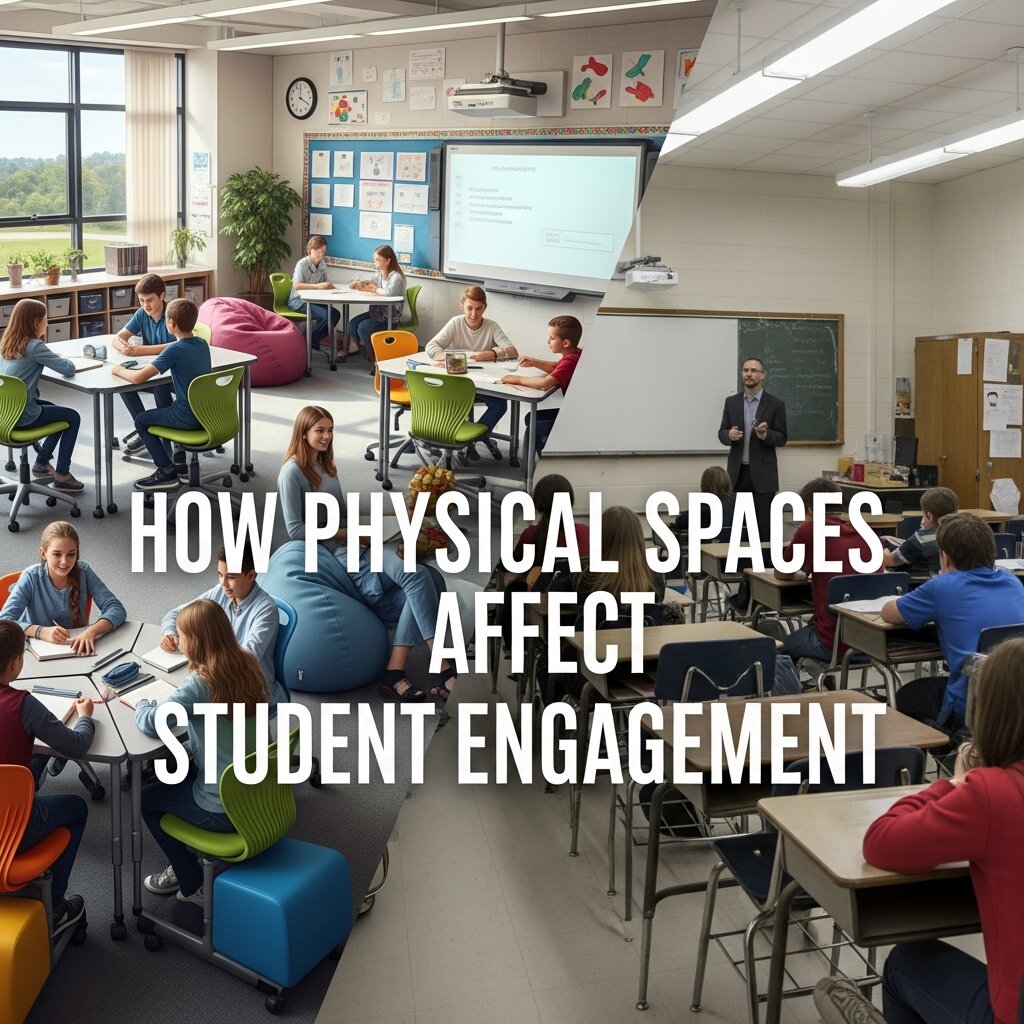 The design of a physical space sends signals—whether educators intend it or not. Rows of desks bolted to the floor suggest passivity and compliance. Flexible furniture arranged in clusters suggests collaboration and dialogue. These aren’t trivial aesthetic differences; they shape how students behave and how motivated they feel to participate.
Research consistently supports the idea that well-designed physical spaces improve academic outcomes. A landmark study by the University of Salford in the UK found that classroom design factors—including light, temperature, air quality, and flexibility—accounted for up to 25% of the variation in student academic progress over a single school year. That’s a substantial influence for something as seemingly basic as where a student sits.
What does a well-designed classroom actually look like?
Effective physical learning environments tend to share a few key characteristics:
- Natural light: Students in classrooms with more natural daylight demonstrate better concentration and higher test scores compared to those in artificially lit spaces.
- Flexible seating: Moveable furniture allows teachers to shift between lectures, group work, and independent study without students feeling physically constrained.
- Acoustic control: Excessive background noise is one of the most overlooked barriers to learning, particularly for younger students and those with hearing difficulties.
- Display and ownership: When students see their work displayed in the classroom, they develop a stronger sense of belonging—and belonging is one of the most powerful predictors of motivation.
These principles are being applied not just in schools but increasingly in higher education institutions redesigning their libraries, common areas, and lecture halls to better support active learning.
The Emotional and Social Climate of a Learning Environment
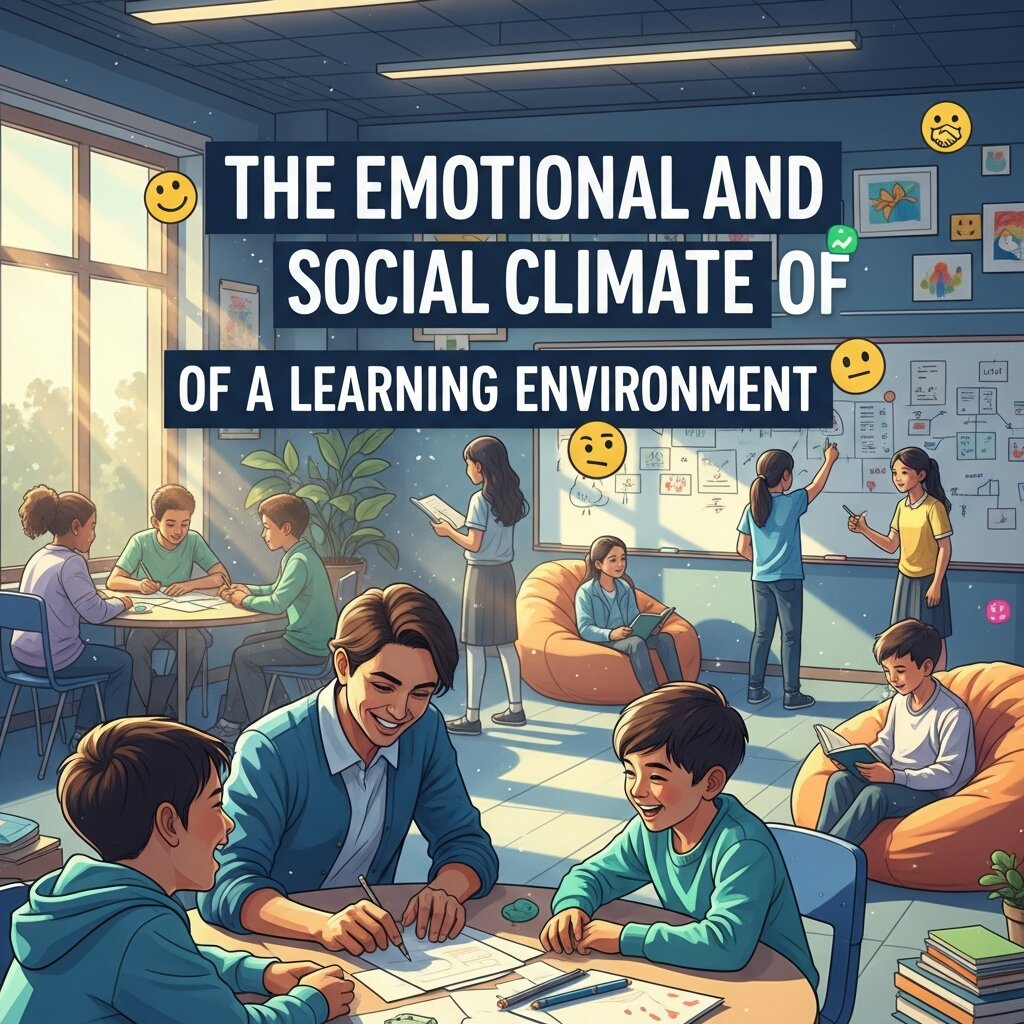 Physical space only tells part of the story. The emotional climate of a learning environment—the extent to which students feel respected, challenged, and supported—has an equally powerful effect on motivation.
Psychologist Carol Dweck’s work on growth mindset has been widely adopted in schools for good reason. When students believe their intelligence is fixed, setbacks feel like evidence of inadequacy. When they believe ability can be developed, those same setbacks become useful data. The learning environment plays a direct role in which mindset takes hold.
Teachers who model curiosity, normalize mistakes, and give specific rather than generic feedback create environments where students are more willing to take intellectual risks. Peer relationships matter just as much. Students who feel connected to their classmates are more likely to persist through difficulty and less likely to disengage when content becomes challenging.
How does psychological safety improve academic performance?
The concept of psychological safety—originally studied in workplace teams by Harvard Business School professor Amy Edmondson—translates powerfully to educational settings. A classroom where students fear embarrassment or ridicule produces the opposite of learning: self-censorship, disengagement, and surface-level performance.
When students feel psychologically safe, participation increases. Questions get asked. Errors get examined rather than hidden. This kind of environment doesn’t happen by accident; it’s built through consistent teacher behavior, clear norms, and a culture of mutual respect.
The Rise of Digital Learning Environments
Digital tools have fundamentally expanded what a learning environment can be. This expansion accelerated dramatically during the COVID-19 pandemic, when millions of students worldwide shifted to fully remote instruction almost overnight. What emerged from that period—messy and imperfect as it was—was a clearer picture of both the promise and the limitations of digital learning.
Mobile learning apps have become a significant part of the educational landscape, particularly in higher education. Apps like Duolingo, Kahoot, Quizlet, and Coursera allow students to engage with course material outside traditional classroom hours, often in short, focused bursts that align with how people actually use their phones. According to a report by Ambient Insight, the global market for mobile learning reached $37.6 billion in 2020, reflecting how deeply this shift has taken hold.
The advantages of mobile learning apps are real. They offer flexibility, instant feedback, and the ability to personalize pace. A student who struggles with a concept can revisit it as many times as needed without the social anxiety of asking a teacher to slow down in front of peers.
But digital environments also introduce new risks. Screen fatigue, distraction, and the erosion of social connection are genuine concerns. The most effective digital learning environments are intentionally designed to minimize these downsides—through structured interaction, community features, and careful attention to cognitive load.
AI in Education: Personalizing the Learning Environment
Perhaps the most significant development reshaping learning environments today is the integration of artificial intelligence. AI in education is no longer a speculative concept; it’s already embedded in tools used by millions of students and educators worldwide.
AI-powered platforms can analyze a student’s performance in real time, identifying gaps in understanding and adjusting the difficulty of exercises accordingly. This kind of adaptive learning is particularly valuable in higher education, where students enter courses with vastly different levels of prior knowledge and learn at very different speeds.
Tools like Khan Academy’s Khanmigo (powered by GPT-4) offer students personalized tutoring conversations that guide rather than give answers—modeling the Socratic method at scale. Carnegie Learning’s AI-driven math platform has demonstrated measurable improvements in student outcomes compared to traditional instruction.
What are the limitations of AI in education?
AI in education is not without valid criticism. Algorithmic systems can reflect the biases of their training data, potentially disadvantaging students from underrepresented groups. There are also legitimate concerns about data privacy, particularly when platforms collect detailed behavioral data from minors.
And perhaps most importantly, AI cannot replace the human relationships at the heart of effective teaching. The connection between a student and a teacher who genuinely believes in them is not something a language model can replicate. The most thoughtful implementations of AI in education treat it as a supplement to human instruction—not a replacement for it.
Learning Environments in Higher Education: A Shifting Landscape
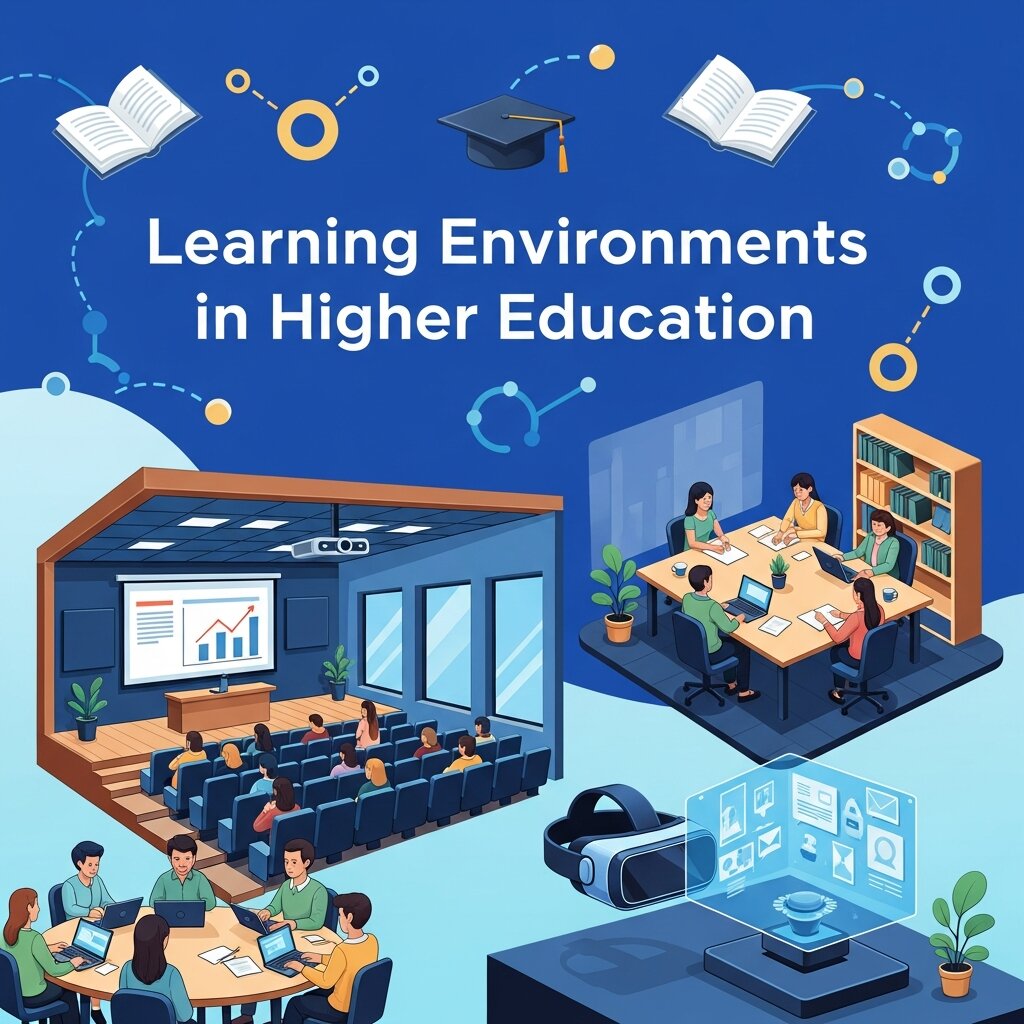 Universities and colleges face a particular set of challenges when it comes to learning environments. Students in higher education are adults navigating increasing levels of autonomy, financial pressure, and competing responsibilities. Their motivation is often more fragile—and more self-directed—than that of younger students.
Institutions that recognize this are making meaningful changes. Hybrid course formats, designed to blend in-person and online instruction, give students greater control over when and how they engage with material. Dedicated spaces for collaborative work—maker spaces, writing centers, peer tutoring programs—create structured opportunities for the kind of social learning that digital environments can struggle to replicate.
Mental health support has also become an integral part of the higher education learning environment. Rates of anxiety and depression among university students have climbed significantly over the past decade, and institutions that fail to address this undermine their own educational mission. A student in psychological distress cannot focus, retain information, or engage meaningfully with challenging material.
Building Learning Environments That Actually Work
What ties all of this together is intentionality. The best learning environments—physical, emotional, or digital—don’t happen by default. They are designed, maintained, and continuously refined based on feedback from the people who use them.
For educators, this means paying attention not just to curriculum but to atmosphere. Are students comfortable enough to take risks? Do they feel seen and valued? Are the digital tools in use actually reducing friction, or adding to it?
For institutions, it means investing in space design, faculty development, and technology infrastructure with the same seriousness applied to academic programming. A state-of-the-art curriculum delivered in a poorly lit, overcrowded classroom with unreliable Wi-Fi is a study in contradictions.
For students themselves, it means recognizing that environment is not fixed. Even within imperfect systems, students who seek out mentors, form study groups, and engage actively with available resources tend to outperform those who don’t—not because they’re smarter, but because they’ve built a learning environment around themselves that supports growth.
Frequently Asked Questions (FAQs)
1. What is a learning environment?
A learning environment is the combination of physical, social, emotional, and digital conditions in which learning takes place. It includes classrooms, online platforms, teaching methods, learning resources, and the interactions between students and educators that support academic growth.
2. Why is a positive learning environment important?
A positive learning environment encourages student engagement, improves motivation, increases confidence, and supports better academic performance. When learners feel safe, respected, and supported, they are more likely to participate actively and retain new knowledge.
3. What are the main types of learning environments?
The main types of learning environments include physical classrooms, online or virtual learning environments, blended learning environments, collaborative learning spaces, and informal learning settings. Many educational institutions combine multiple environments to enhance learning experiences.
4. How does the physical learning environment affect student performance?
Factors such as classroom layout, lighting, temperature, seating arrangements, and noise levels directly influence concentration, participation, and overall learning outcomes. Well-designed learning spaces create a more comfortable and productive educational experience.
5. What role does technology play in a learning environment?
Technology enhances learning by providing access to digital resources, virtual classrooms, mobile learning apps, interactive assessments, and AI-powered educational tools. It also supports personalized learning and greater flexibility for both students and educators.
6. How can teachers create an effective learning environment?
Teachers can build effective learning environments by encouraging open communication, promoting respect, providing constructive feedback, using engaging teaching strategies, supporting collaboration, and creating opportunities for active student participation.
7. What is psychological safety in a learning environment?
Psychological safety refers to an atmosphere where students feel comfortable asking questions, expressing ideas, making mistakes, and participating without fear of embarrassment or criticism. It promotes deeper learning, creativity, and critical thinking.
8. How does AI improve modern learning environments?
AI helps personalize education by adapting learning materials to individual student needs, providing instant feedback, identifying knowledge gaps, automating administrative tasks, and offering intelligent tutoring systems that improve learning efficiency.
9. What challenges can affect a learning environment?
Common challenges include overcrowded classrooms, limited educational resources, poor technology infrastructure, lack of student engagement, distractions, inadequate teacher support, and unequal access to digital learning tools.
10. How can schools and universities improve their learning environments?
Educational institutions can improve learning environments by investing in modern classroom design, integrating educational technology, supporting teacher development, promoting inclusive learning practices, strengthening student well-being services, and continuously collecting feedback to enhance the overall learning experience.
The Environment Is Part of the Education
Learning doesn’t happen in a vacuum. Every classroom, campus, app, and online forum is a context that shapes what students believe about themselves, what they’re willing to try, and how far they’re willing to push.
Getting the learning environment right won’t solve every problem in education. But ignoring it guarantees that even the best teaching won’t reach its full potential. The environment isn’t just where learning happens—it’s part of how learning happens.