Classrooms look different than they did just a decade ago. Chalkboards have given way to smart screens, paper worksheets now live in the cloud, and teachers have a powerful new assistant working alongside them. That assistant is artificial intelligence.
AI in education is no longer a futuristic concept reserved for tech conferences and research labs. It’s already shaping how students learn, how teachers teach, and how institutions operate—from elementary schools to universities. Adaptive learning platforms, intelligent tutoring systems, and automated grading tools are helping educators personalize instruction in ways that were impossible before.
This post explores how AI is transforming classrooms across the globe. You’ll learn about the practical applications driving this change, the benefits for both students and teachers, the challenges that come with adoption, and what the future holds. Whether you’re an educator, administrator, or simply curious about the technology reshaping learning, you’ll walk away with a clear understanding of where things stand—and where they’re headed.
What Does AI in Education Actually Mean?
At its core, AI in education refers to the use of machine learning, natural language processing, and data analysis to support teaching and learning. These technologies can analyze how a student answers questions, identify where they struggle, and adjust lessons in real time.
Think of it as a layer of intelligence sitting on top of existing educational tools. Instead of every student following the same fixed path, AI allows learning to flex around individual needs. A student who masters fractions quickly can move ahead, while another who needs more practice gets extra support—all within the same classroom.
This shift matters because traditional one-size-fits-all teaching has always struggled to meet every learner where they are. With 20 to 30 students per class, teachers simply can’t give constant individual attention. AI helps close that gap.
Personalized Learning at Scale
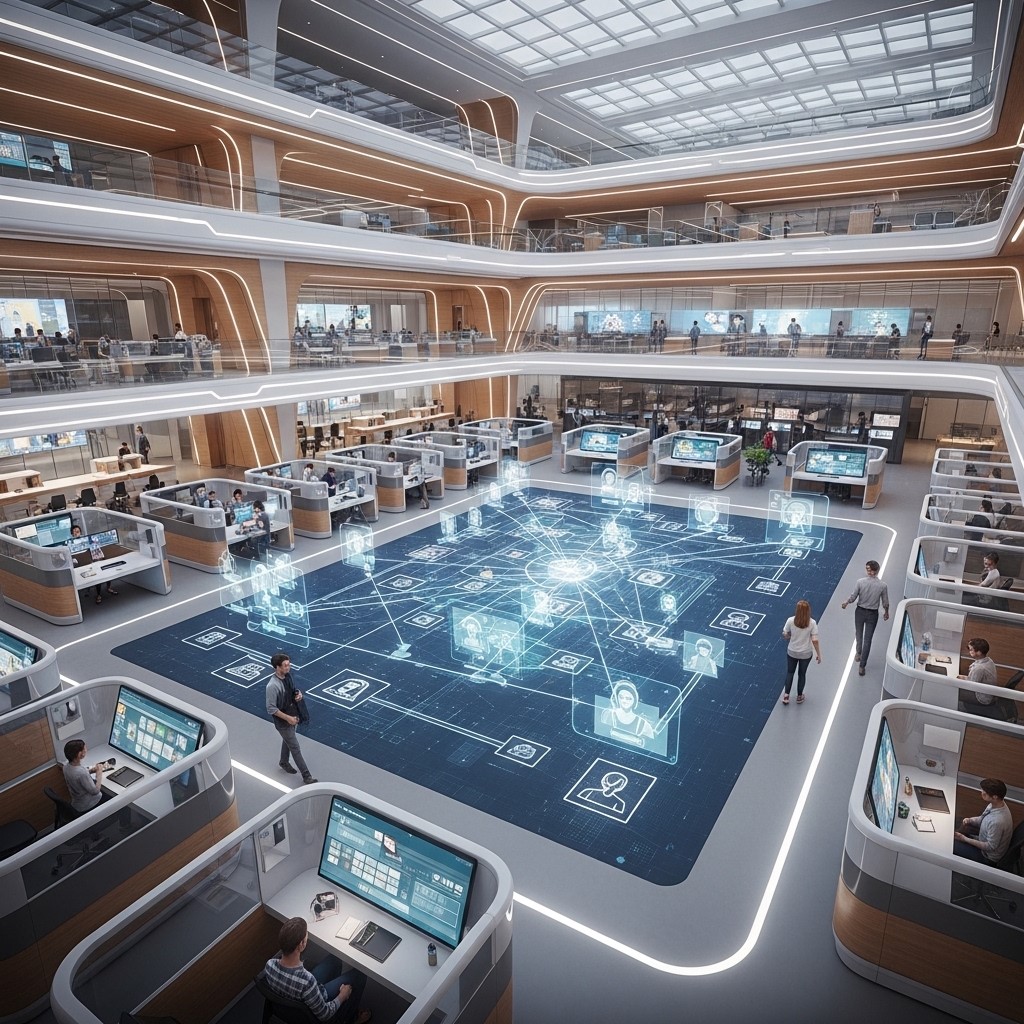 The most powerful application of AI in education is personalization. Adaptive learning platforms like DreamBox, Khan Academy, and Carnegie Learning use algorithms to tailor content to each student’s pace and skill level.
Here’s how it works in practice:
- Real-time adjustment: When a student gets a question wrong, the system identifies the gap and serves up targeted practice instead of pushing forward.
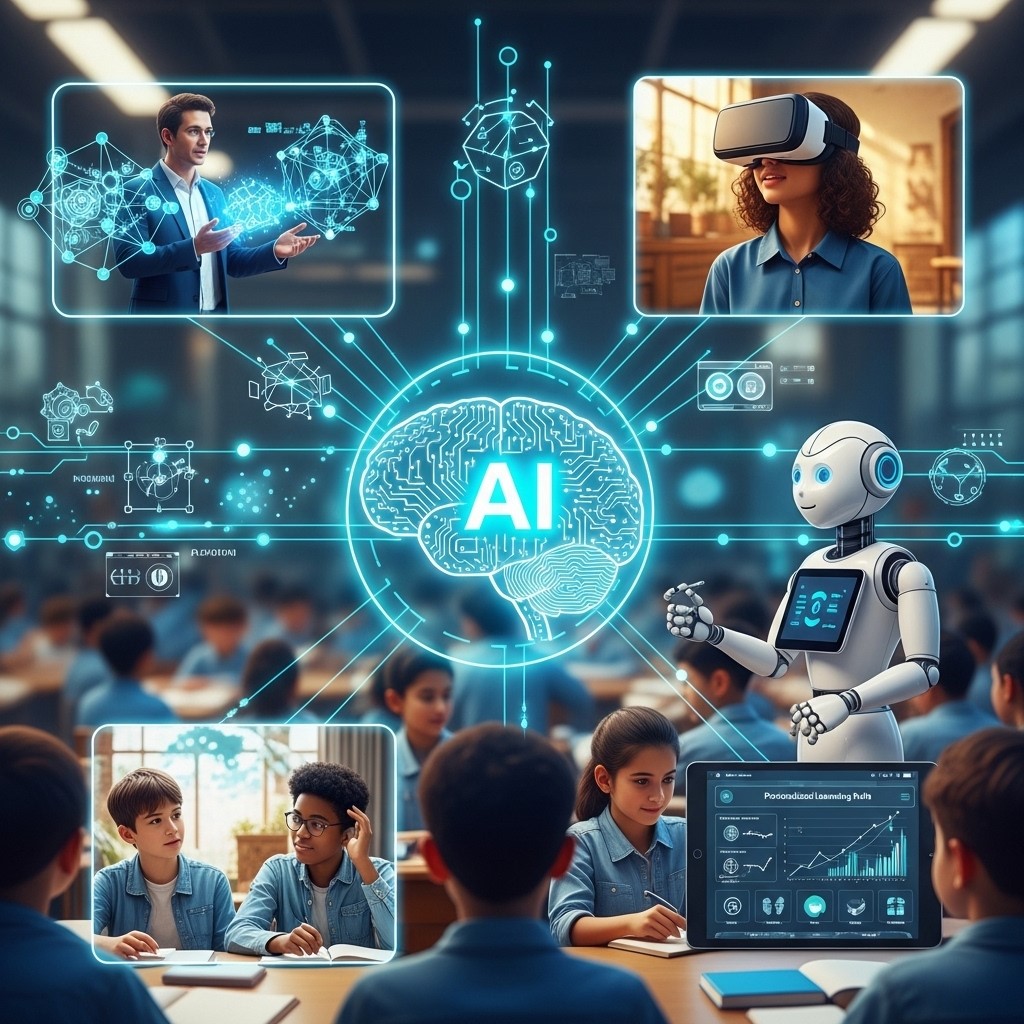
- Progress tracking: Teachers receive detailed dashboards showing exactly who is thriving and who needs help.
- Custom learning paths: Each student follows a route shaped by their strengths, weaknesses, and learning style.
This kind of personalization used to require one-on-one tutoring, which most families and schools couldn’t afford. Now, it’s available to entire classrooms through software.
Intelligent Tutoring and Self Learning AI Chatbots
Beyond adaptive platforms, a new generation of self learning ai chatbot tools is changing how students get help outside the classroom. These chatbots act as virtual tutors, available around the clock to answer questions, explain concepts, and walk students through problems step by step.
Tools like ChatGPT, Google’s Gemini, and dedicated education bots can break down a tricky algebra problem or explain the causes of World War I in plain language. Because they learn from interactions, these systems get better at understanding what students need and how to respond.
For students who feel too shy to raise their hand in class, a chatbot offers a judgment-free space to ask “silly” questions. For those studying late at night, it provides instant support when no teacher is available. This accessibility is especially valuable in regions where qualified teachers are in short supply.
That said, these tools work best as a supplement, not a replacement. The goal is to extend the reach of good teaching, not to remove the human element entirely.
Easing the Burden on Teachers
AI doesn’t just help students—it gives teachers their time back. Administrative tasks eat up a huge chunk of a teacher’s day, and automation can lighten that load significantly.
Consider these time-saving applications:
- Automated grading: AI can grade multiple-choice tests, quizzes, and even short written answers in seconds.
- Lesson planning: Generative AI tools help teachers draft lesson plans, create worksheets, and brainstorm activities.
- Attendance and reporting: Routine record-keeping can be handled automatically, freeing up valuable hours.
When teachers spend less time on paperwork, they have more time for what matters most: connecting with students, refining their craft, and offering the kind of mentorship no machine can replicate.
How Social Media for Education Fits In
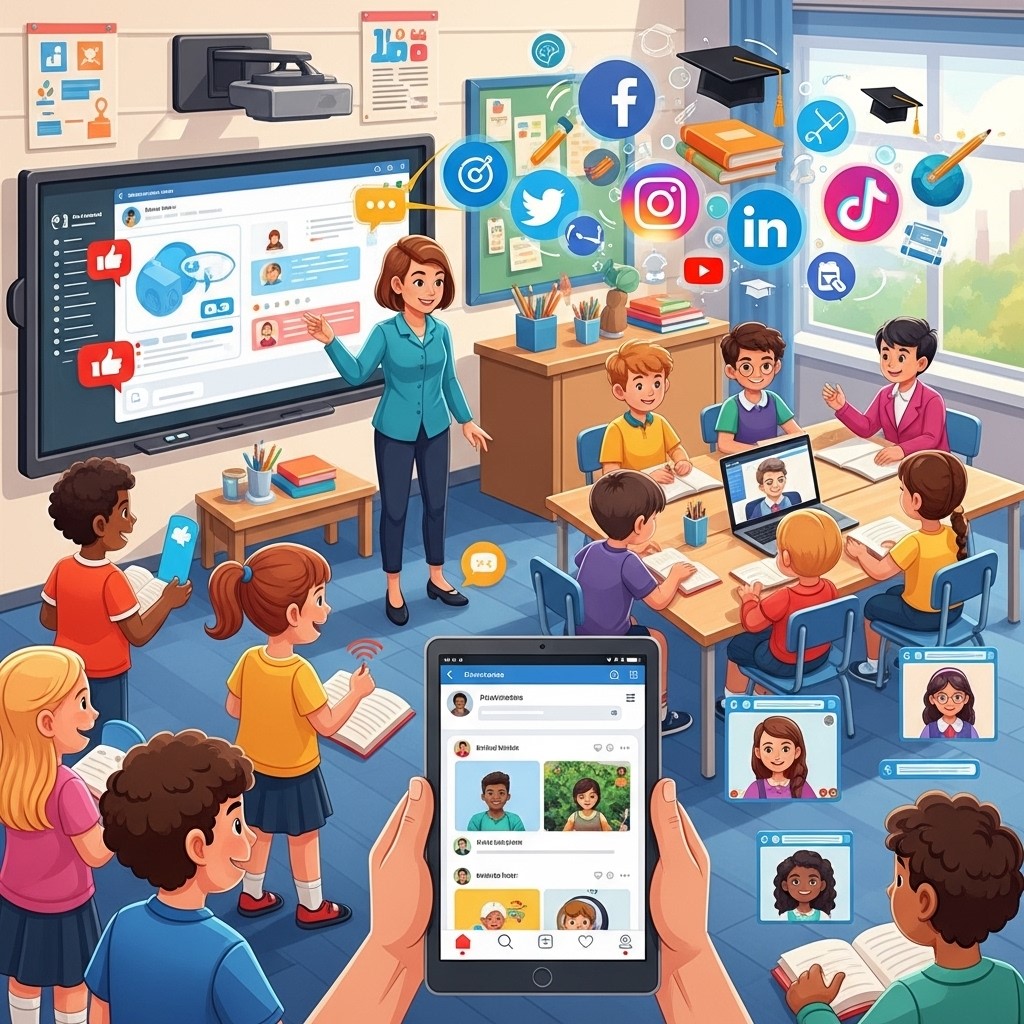 Learning increasingly happens outside formal settings, and social media for education has become a surprisingly powerful channel. Platforms like YouTube, TikTok, and LinkedIn Learning host millions of educational videos, while AI-driven recommendation engines surface relevant content based on what learners watch and search.
AI shapes this experience behind the scenes. Recommendation algorithms suggest the next helpful tutorial, group students with similar interests, and even flag misinformation. A teenager curious about chemistry can follow a chain of AI-recommended videos that builds genuine understanding over time.
This blend of social platforms and intelligent curation has made learning more social, more visual, and more accessible than ever. Students share notes, join study communities, and learn from peers across the world—all guided by algorithms designed to keep them engaged with quality material.
Expanding Access Through Non Formal Education
One of the most exciting promises of AI is its ability to support non-formal education—learning that happens outside traditional schools and structured curricula. This includes adult learners picking up new skills, professionals reskilling for new careers, and people in underserved communities who lack access to formal institutions.
AI-powered apps like Duolingo demonstrate this beautifully. Using adaptive algorithms, Duolingo personalizes language lessons for over 500 million users worldwide, many of whom have no access to formal language instruction. The app adjusts difficulty based on performance and uses spaced repetition to strengthen memory.
For learners in remote or low-income areas, AI tools can deliver quality education through nothing more than a smartphone. This democratization of knowledge has the potential to close long-standing gaps in educational access—gaps that geography and income have historically widened.
Real Challenges Worth Taking Seriously
For all its promise, AI in education brings genuine challenges that schools and policymakers can’t ignore.
Data privacy sits at the top of the list. AI systems collect enormous amounts of information about students, raising serious questions about who controls that data and how it’s protected. Strong safeguards and clear policies are essential.
The digital divide is another concern. Students without reliable internet access or modern devices risk falling further behind as classrooms go digital. AI could widen inequality rather than reduce it if access isn’t addressed.
Over-reliance on technology also warrants caution. Learning involves struggle, critical thinking, and human connection. If students lean too heavily on AI for answers, they may miss the deeper learning that comes from working through problems themselves.
Finally, there’s the matter of accuracy. AI tools sometimes produce confident but incorrect information. Students need guidance to think critically and verify what these systems tell them.
What the Future of AI in Education Looks Like
 The trajectory is clear: AI will become more woven into everyday learning, not less. We’re likely to see smarter tutoring systems that understand emotion and motivation, virtual reality classrooms powered by AI, and tools that help students with disabilities learn in ways tailored precisely to their needs.
The key will be balance. The schools that benefit most won’t be the ones that hand everything over to machines. They’ll be the ones that use AI to amplify great teaching—freeing educators to do the deeply human work of inspiring, mentoring, and guiding young minds.
Teachers aren’t being replaced. They’re being empowered. And students, in turn, are gaining access to a level of personalized, flexible learning that previous generations could only dream of.
AI-Powered Assessment and Instant Feedback
Assessment plays a critical role in education, but traditional grading methods can be time-consuming and often delay feedback for students. AI-powered assessment tools help solve this challenge by evaluating quizzes, assignments, and tests in real time. Students receive immediate insights into their performance, allowing them to identify mistakes and improve their understanding more quickly. Teachers also benefit by reducing the hours spent on grading and administrative tasks. Instead of focusing on paperwork, educators can dedicate more time to personalized instruction and student support. By providing faster feedback and detailed performance analytics, AI helps create a more responsive and effective learning environment.
Supporting Students With Special Educational Needs
Artificial intelligence is helping make education more inclusive and accessible for students with different learning abilities and challenges. AI-driven tools such as speech recognition, text-to-speech software, language translation systems, and personalized learning platforms allow students to learn in ways that best suit their needs. Learners with visual impairments, hearing difficulties, dyslexia, or other learning disabilities can access educational content more effectively. AI can also adapt lessons according to individual progress and learning speed, ensuring that no student is left behind. As educational institutions focus on inclusivity, AI is becoming a valuable resource for creating equal learning opportunities for all students.
AI and Data-Driven Decision Making in Schools
Educational institutions generate large amounts of data every day, including attendance records, assessment results, engagement metrics, and learning progress reports. AI helps schools transform this information into actionable insights. By analyzing patterns and trends, AI systems can identify students who may be struggling academically or at risk of dropping out. Teachers and administrators can then intervene early with targeted support strategies. AI-driven analytics also help schools evaluate curriculum effectiveness, optimize resource allocation, and improve overall educational outcomes. This data-driven approach enables institutions to make smarter decisions that enhance both student achievement and operational efficiency.
Preparing Students for an AI-Driven Workforce
As artificial intelligence continues to transform industries worldwide, students must develop the skills needed to thrive in an increasingly technology-focused job market. Schools are beginning to incorporate AI literacy, digital problem-solving, critical thinking, and data analysis into their curricula. Exposure to AI tools helps students understand how emerging technologies work and how they can be used responsibly. Beyond technical skills, students learn adaptability, creativity, and collaboration—qualities that remain essential in an automated world. By integrating AI into education today, institutions can better prepare learners for future careers while ensuring they remain competitive in a rapidly evolving global economy.
Frequently Asked Questions
1. What is AI in education?
AI in education refers to the use of artificial intelligence technologies to support teaching, learning, assessment, and administrative tasks. It helps personalize learning experiences and improve educational outcomes.
2. How does AI improve student learning?
AI analyzes student performance and adapts lessons to individual needs. It provides personalized feedback, targeted practice, and customized learning paths that help students learn more effectively.
3. What are some examples of AI in education?
Examples include adaptive learning platforms, intelligent tutoring systems, automated grading tools, virtual teaching assistants, language-learning apps, and AI-powered educational chatbots.
4. Can AI replace teachers in the classroom?
No. AI is designed to support teachers, not replace them. Educators provide mentorship, emotional support, critical thinking guidance, and human interaction that technology cannot fully replicate.
5. What are the benefits of AI for teachers?
AI reduces administrative workloads by automating tasks such as grading, attendance tracking, lesson planning, and data analysis, allowing teachers to spend more time supporting students.
6. How are AI chatbots used in education?
AI chatbots help students by answering questions, explaining concepts, providing study assistance, and offering learning support anytime, making education more accessible outside school hours.
7. What challenges does AI in education present?
Common challenges include data privacy concerns, unequal access to technology, potential over-reliance on AI tools, and the risk of receiving inaccurate or misleading information.
8. How does AI support non-formal education?
AI-powered learning platforms enable people to develop skills, learn languages, and access educational content outside traditional classrooms, making learning more flexible and accessible.
9. Is AI in education suitable for all age groups?
Yes. AI tools can be adapted for learners of all ages, from elementary school students to university learners and working professionals pursuing lifelong education.
10. What is the future of AI in education?
The future includes more advanced personalized learning, intelligent tutoring systems, AI-powered accessibility tools, immersive virtual learning environments, and greater support for teachers and students worldwide.
Bringing AI Into Your Classroom Thoughtfully
AI in education is reshaping classrooms worldwide, and the change is only accelerating. From personalized learning paths and round-the-clock tutoring to expanded access for underserved communities, the technology offers real, measurable benefits. At the same time, success depends on addressing privacy, equity, and the irreplaceable value of human teaching.
If you’re an educator or administrator ready to explore these tools, start small. Pick one challenge—maybe grading, maybe personalization—and test a single AI tool to solve it. Measure the results, gather feedback from students, and build from there.