Anyone who has interacted with a legacy customer service widget knows the frustration of repetitive, rigid menus. You ask a specific question, and the system replies with a generic menu of options that completely ignores your actual problem. Early automated assistants operated strictly on pre-programmed rules, making them highly limited and often deeply unhelpful.
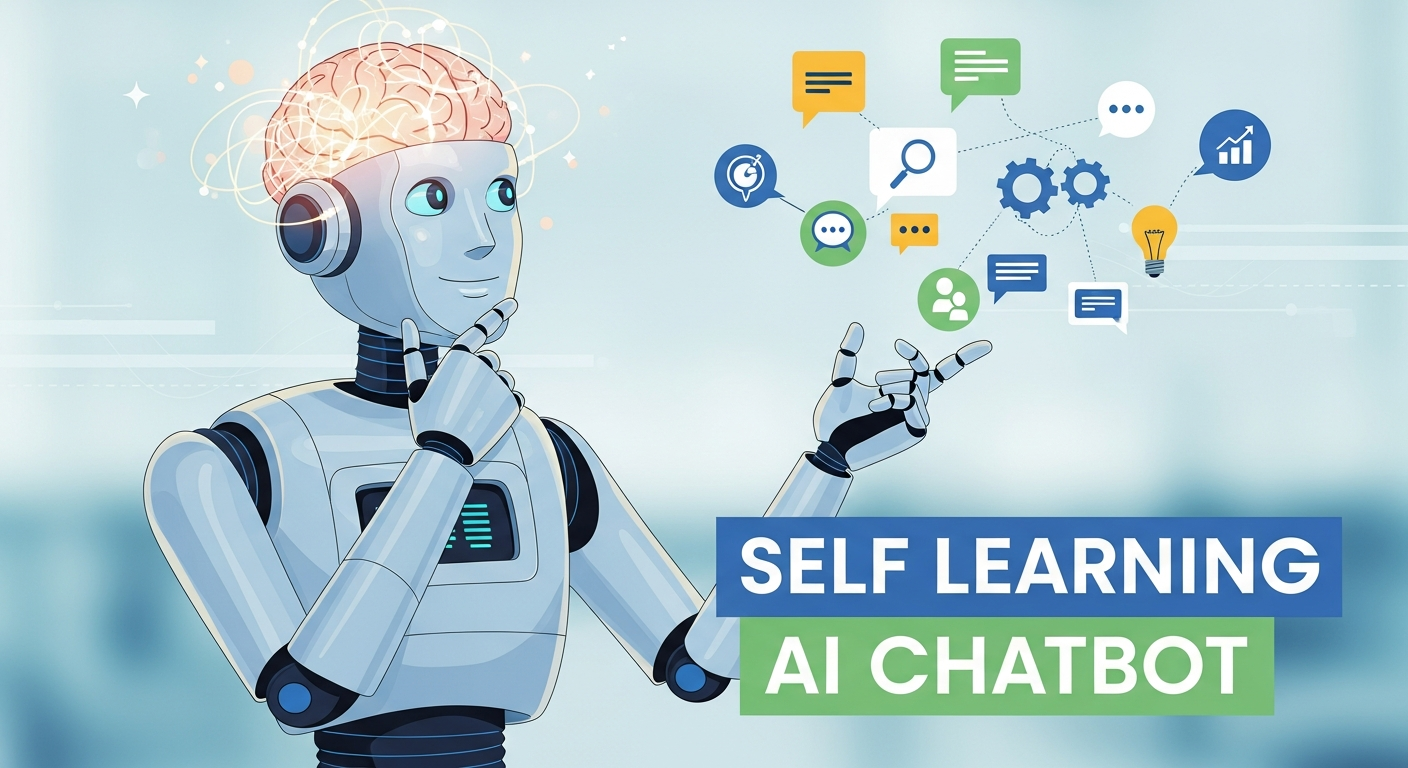
Technology has moved far beyond these rudimentary scripts. Modern digital environments now rely heavily on dynamic conversational agents that adapt, evolve, and remember. At the heart of this shift is the self learning AI chatbot. These advanced systems do not just regurgitate canned responses. They analyze context, process human language naturally, and adjust their future behavior based on past interactions.
By implementing a self learning AI chatbot, organizations can deliver highly personalized user experiences that feel distinctly human. Whether deployed for customer support, e-commerce recommendations, or internal employee assistance, these intelligent systems learn what users need before they even ask. This article explores how autonomous, learning-driven chatbots operate, the ways they are reshaping digital interactions, and how you can leverage them to build deeper connections with your audience.
The Mechanics of Autonomous Chatbot Systems
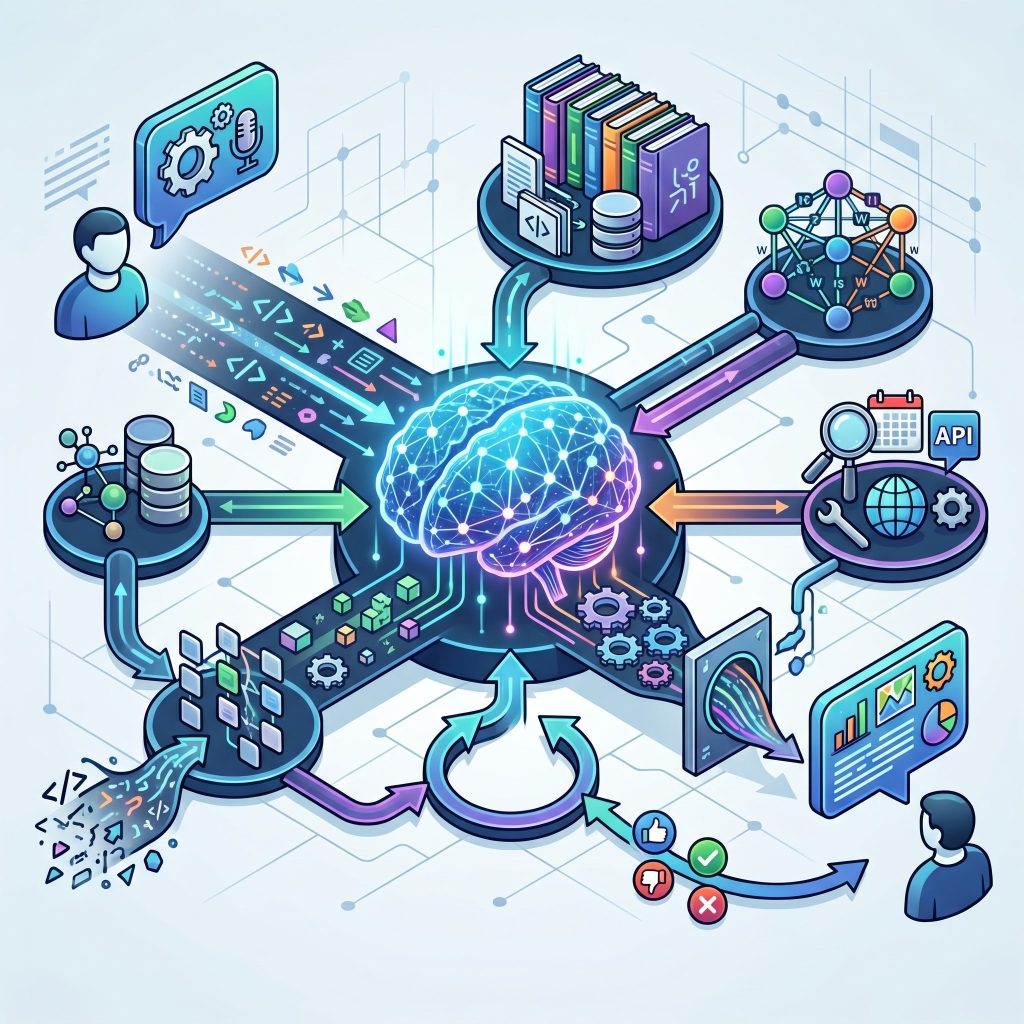 To understand why these tools are so effective, you have to look under the hood. A self learning AI chatbot relies on a combination of machine learning algorithms and natural language processing (NLP).
Moving Beyond Rule-Based Logic
Traditional bots operate on decision trees. If a user types “refund,” the bot triggers the refund script. If the user types a phrase the developer did not anticipate, the system fails. Self-learning systems bypass this limitation entirely.
By utilizing neural networks, these chatbots process vast datasets of human conversation. They understand the intent behind a message rather than just scanning for specific keywords. When a user asks, “Can I get my money back?” or “I am unhappy with this purchase,” the AI recognizes that both phrases express the same underlying desire for a refund.
Continuous Improvement Loop
The defining feature of a self learning AI chatbot is its ability to grow smarter over time. Every interaction serves as training data. When a chatbot provides an answer and the user responds positively, the system reinforces that pathway. If the user expresses frustration or asks for human escalation, the bot registers a failure and adjusts its algorithmic weighting to avoid repeating the mistake.
This continuous feedback loop means the system requires progressively less manual maintenance. Instead of a developer constantly rewriting scripts to cover new edge cases, the chatbot identifies emerging trends in user inquiries and formulates appropriate responses based on historical context.
Transforming Education and Learning
 One of the most exciting applications for adaptive AI is within the realm of knowledge sharing. The traditional one-size-fits-all approach to teaching often leaves some students struggling while others become bored. AI has the potential to democratize personalized tutoring.
Adaptive Academic Support
In the context of Education and Learning, a self learning AI chatbot acts as a tireless, personalized tutor. When a student interacts with the bot to practice a foreign language or solve complex math equations, the system monitors their proficiency level. If the student consistently struggles with verb conjugations, the chatbot can automatically adjust its curriculum to provide more targeted practice in that specific area.
These platforms offer immediate, judgment-free feedback. A student might feel embarrassed to ask a human teacher to explain a concept for the fourth time. A chatbot, however, maintains infinite patience. It can explain the same concept using different metaphors, breaking down complex theories into digestible components until the user finally understands.
Social Media for Education
Social networks are no longer just for entertainment. Educators and institutions increasingly leverage Social Media for Education, meeting students where they already spend their time. Integrating a self learning AI chatbot into these platforms supercharges community learning.
For instance, an educational institution can deploy a chatbot on messaging apps associated with social media networks. When students collaborate in group chats, the bot can act as a silent moderator and resource guide. If students are debating a historical fact, the bot can seamlessly interject with primary source links or clarify misconceptions. By bridging the gap between casual social scrolling and active knowledge acquisition, learning becomes a continuous, integrated part of daily digital life.
Designing Highly Personalized User Experiences
Personalization is the primary driver of customer loyalty. Users expect brands to understand their preferences, anticipate their needs, and respect their time.
Contextual Memory and User History
A major advantage of advanced chatbots is their contextual memory. If an online shopper logs into their account and asks for clothing recommendations, the self learning AI chatbot references their past purchase history, browsing behavior, and previous chat logs.
Instead of showing generic seasonal items, the bot might suggest a specific pair of running shoes, noting that the user bought a similar brand six months ago and might be due for a replacement. This level of granular personalization mimics the experience of shopping with a highly attentive, dedicated personal concierge.
Sentiment Analysis in Real-Time
Words only convey a fraction of human communication. Tone and emotion play massive roles in how we interpret interactions. Modern AI systems use sentiment analysis to gauge the emotional state of the user in real-time.
If a user uses aggressive punctuation, short sentences, or specific words associated with frustration, the chatbot detects this negative sentiment. It can immediately adapt its communication style, perhaps shifting to a more empathetic tone or instantly routing the conversation to a specialized human support agent. By catching frustration early, brands can salvage the customer relationship before it deteriorates completely.
Navigating Implementation and Maintenance
While the benefits are substantial, deploying these systems requires careful planning. Organizations must balance the desire for deep personalization with the critical need for user trust.
Securing User Data
A self learning AI chatbot thrives on data. To personalize interactions, it must collect and analyze user preferences, conversation histories, and behavioral metrics. This heavy reliance on data makes privacy a top priority.
Companies must ensure their AI systems comply with global data protection regulations like GDPR and CCPA. Transparency is crucial. Users should clearly understand what data the chatbot collects, how that data will be used to improve their experience, and how they can opt out if they prefer a less personalized interaction.
Preventing Algorithmic Bias
Because self-learning bots learn from user inputs and historical datasets, they are susceptible to adopting biases present in that data. If a chatbot is trained on a dataset that leans heavily toward a specific demographic, it might struggle to understand or properly serve users outside that group.
Developers must regularly audit the chatbot’s decision-making processes. Establishing clear guardrails and utilizing diverse training datasets ensures that the AI remains fair, inclusive, and accurate. Human oversight remains a necessary component, not to write the scripts, but to monitor the ethical alignment of the machine’s autonomous learning.
AI Chatbots in E-Commerce and Online Shopping
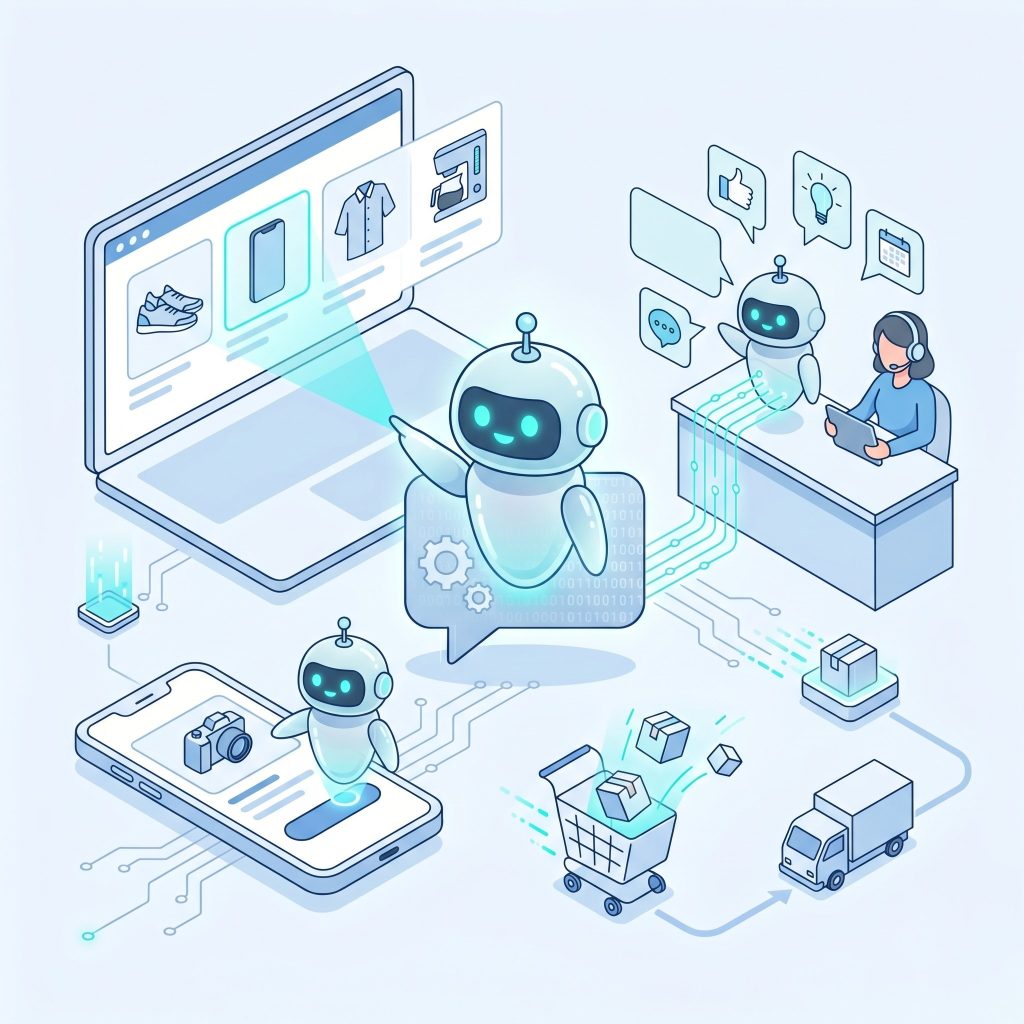 E-commerce businesses are increasingly using self learning AI chatbots to create smarter and more personalized shopping experiences. These systems guide customers through product recommendations, answer questions instantly, and reduce cart abandonment rates. By analyzing browsing history and purchasing patterns, the chatbot can predict what a customer might want before they even search for it. This level of personalization improves customer satisfaction and increases sales conversions. Additionally, AI-powered chatbots can operate around the clock, ensuring shoppers always receive support regardless of time zones or business hours. As online competition continues to grow, businesses that integrate intelligent chatbot systems gain a significant advantage in customer engagement and retention.
The Role of AI Chatbots in Customer Support Automation
Customer service departments often struggle with overwhelming numbers of support requests every day. A self learning AI chatbot helps reduce this pressure by handling repetitive inquiries automatically. Instead of forcing customers to wait in long queues, the chatbot can instantly answer questions about orders, billing, shipping, or account access. These systems continuously improve by learning from previous support interactions, which helps them provide more accurate solutions over time. Businesses also benefit from lower operational costs because fewer human agents are required for basic support tasks. By automating routine communication while escalating complex cases to human representatives, organizations can provide faster, more efficient, and more satisfying customer support experiences.
How AI Chatbots Improve Business Productivity
Organizations use self learning AI chatbots to streamline internal operations and improve employee productivity. Instead of searching through documents or waiting for IT support, employees can ask chatbots for quick answers related to company policies, technical troubleshooting, or workflow guidance. This reduces delays and allows staff members to focus on more strategic tasks. AI chatbots can also automate repetitive administrative processes such as scheduling meetings, collecting feedback, or managing onboarding activities for new employees. Over time, these systems learn common workplace patterns and provide increasingly relevant assistance. By reducing manual workloads and improving information accessibility, businesses create faster and more efficient work environments across multiple departments.
The Future of Conversational AI Technology
Conversational AI continues to evolve rapidly as machine learning models become more advanced and capable of understanding complex human communication. Future self learning AI chatbots will likely integrate voice recognition, emotional intelligence, and predictive analytics to create even more natural interactions. Instead of simply responding to questions, these systems may proactively suggest actions, identify problems before they occur, and assist users with highly personalized recommendations. Industries such as healthcare, finance, education, and retail are expected to rely heavily on AI-driven communication systems in the coming years. As technology improves, conversational AI will become a central component of digital transformation strategies for organizations seeking to remain competitive in a fast-changing marketplace.
Challenges Businesses Face When Implementing AI Chatbots
Although self learning AI chatbots offer many advantages, implementation can present several challenges for businesses. Training the chatbot requires large amounts of accurate and diverse data to ensure the system understands different user behaviors and communication styles. Poorly trained systems may generate inaccurate responses or misunderstand customer intent, leading to frustration. Integration with existing software platforms can also be technically demanding, especially for organizations using outdated infrastructure. Additionally, businesses must address privacy concerns and maintain compliance with data protection regulations when handling user information. Continuous monitoring and updates are essential to ensure the chatbot remains accurate, secure, and aligned with organizational goals as customer expectations continue evolving.
Frequently Asked Questions (FAQ)
What is a self learning AI chatbot?
A self learning AI chatbot is an advanced conversational system that improves its responses over time through machine learning and user interactions. Unlike traditional rule-based bots, it can understand context, analyze intent, and adapt based on previous conversations.
How does a self learning AI chatbot work?
A self learning AI chatbot works by combining natural language processing (NLP) with machine learning algorithms. The chatbot studies patterns in conversations, identifies user intent, and continuously refines its responses using feedback from interactions. Over time, the system becomes more accurate and effective without requiring constant manual updates.
What are the benefits of using a self learning AI chatbot?
These chatbots improve customer engagement by providing instant responses, personalized recommendations, and 24/7 support. They also reduce operational costs, automate repetitive tasks, and help businesses collect valuable insights about customer behavior.
Can self learning AI chatbots support education and training?
Yes, self learning AI chatbots are widely used in educational environments. They can provide personalized tutoring, answer student questions, and adapt lessons based on individual learning progress. This creates a more flexible and interactive learning experience for students of all skill levels.
Are self learning AI chatbots secure?
Modern AI chatbot systems can be highly secure when organizations implement strong data protection measures. Businesses should use encrypted communication, secure cloud infrastructure, and compliance frameworks like GDPR or CCPA to protect user information. Regular monitoring and ethical AI practices are also important for maintaining trust and security.
Elevate Your Engagement Strategy
Transitioning from static menus to dynamic conversations is a fundamental upgrade to your digital ecosystem. A self learning AI chatbot does not just answer questions; it builds relationships, anticipates needs, and creates a tailored environment for every single visitor.
Start by identifying the friction points in your current user journey. Are your customers abandoning their shopping carts because they cannot find quick answers? Are your students struggling to access timely academic support? Pinpoint the areas where personalized, instant communication could make the most significant impact. Audit your existing data to see what insights you can feed an AI system to kickstart its learning process. By investing in autonomous conversational systems, you position your organization to deliver the highly customized, intelligent experiences that modern users demand.