There’s a quiet frustration that many online learners share. They finish a course, close their laptop, and wonder: What did I actually learn? Without clear direction, even the most well-produced online course can leave students feeling like they’ve just scrolled through a lot of information without gaining anything meaningful. Learning outcomes fix that problem.
Learning outcomes are precise, measurable statements that describe what a student will know or be able to do by the end of a course or lesson. They act as a navigational system—for educators designing the curriculum, for students working through it, and for institutions measuring its effectiveness. When written and applied well, learning outcomes transform a passive online experience into one that’s structured, purposeful, and genuinely impactful.
This post explores how learning outcomes enhance online learning experiences across different educational contexts, from higher education programs to mobile learning apps. You’ll also find practical guidance on how to write strong learning outcomes and why they matter more than ever as AI in education continues to reshape the landscape.
What Are Learning Outcomes, and Why Do They Matter?
Learning outcomes are not the same as learning objectives, though the two terms are often used interchangeably. Objectives describe what an instructor intends to teach. Outcomes describe what the learner will be able to demonstrate. The shift in focus—from teacher to learner—is significant.
A well-crafted learning outcome is specific, observable, and achievable. Rather than saying “students will understand digital marketing,” a strong outcome reads: “Students will be able to create a social media content calendar aligned with a defined target audience and campaign goal.” That kind of clarity benefits everyone involved.
For online learners, this matters enormously. Online education removes the natural feedback loops of a physical classroom—no raised hands, no facial expressions, no spontaneous discussion. Without those cues, students can easily lose their footing. Learning outcomes provide the scaffolding that keeps them on track.
How Learning Outcomes Improve Course Design in Higher Education
 In higher education, learning outcomes have long been a cornerstone of accreditation and curriculum planning. But their role in online course design goes beyond compliance. When faculty build courses around clearly defined outcomes, every element—readings, assessments, discussions, and multimedia—serves a deliberate purpose.
This approach is called constructive alignment, a concept developed by educational psychologist John Biggs. The idea is simple: align your teaching activities and assessments directly with your intended learning outcomes. When alignment is strong, students are not left guessing what they need to do or why. The course communicates its value at every step.
In practice, higher education institutions that adopt outcome-based design tend to see stronger student engagement and lower dropout rates in online programs. When learners understand what they’re working toward, they’re more motivated to push through challenging content rather than abandon the course when things get hard.
Learning outcomes also make assessment more transparent. Students know upfront what success looks like, which reduces anxiety and levels the playing field between those who are confident learners and those who are not.
The Role of Learning Outcomes in Mobile Learning Apps
Mobile learning apps have made education more accessible than ever. A commuter can study a new language on a train. A nurse can complete professional development between shifts. But accessibility alone doesn’t guarantee learning. Without outcomes, many mobile learning experiences are little more than gamified content consumption.
The best mobile learning apps use learning outcomes to break instruction into focused, achievable micro-goals. Each module or lesson is built around a single, clearly stated outcome, which keeps sessions short, purposeful, and satisfying. When learners complete a five-minute lesson and know exactly what skill they’ve just practiced, the experience feels rewarding rather than arbitrary.
Duolingo, for example, structures its language courses around granular skill outcomes. Each exercise maps back to a specific communicative competency—forming questions, using past tense, describing locations—rather than presenting vocabulary as a disconnected list. The result is a learning path that feels coherent even in small increments.
For app developers and instructional designers working in the mobile learning space, outcomes also inform how progress is tracked and communicated. Rather than showing learners a percentage bar that represents time spent, outcome-based tracking shows mastery. That shift in feedback changes how learners perceive their own progress.
How to Write Learning Outcomes That Actually Work
 Writing effective learning outcomes is a craft. The most widely used framework is Bloom’s Taxonomy, which organizes cognitive skills into six levels: remember, understand, apply, analyze, evaluate, and create. Each level corresponds to a different depth of learning, and each can be expressed through action verbs that make outcomes measurable.
Here’s how that looks in practice:
- Remember: “Students will be able to list the five stages of the design thinking process.”
- Understand: “Students will be able to explain the difference between qualitative and quantitative research.”
- Apply: “Students will be able to conduct a basic usability test using a defined testing protocol.”
- Analyze: “Students will be able to identify gaps in a competitor’s content marketing strategy.”
- Evaluate: “Students will be able to assess the effectiveness of a brand’s social media presence against established benchmarks.”
- Create: “Students will be able to develop a six-week content plan for a product launch campaign.”
The level you choose should match the actual demands of the course. Introductory courses typically focus on lower-order skills like remembering and understanding. Advanced or professional courses should push learners toward analysis, evaluation, and creation.
One common mistake is writing outcomes that are too broad to assess. “Students will gain an appreciation for diversity in the workplace” is difficult to measure. “Students will be able to describe three evidence-based strategies for fostering inclusion in team environments” is not.
Another pitfall is writing too many outcomes for a single course. A focused course with five to eight clear, achievable outcomes will outperform one with twenty vague ones every time.
How AI in Education Is Changing the Way Learning Outcomes Are Applied
AI in education is not just automating administrative tasks—it’s beginning to reshape how learning outcomes are used at a personalized level. Adaptive learning platforms like Coursera’s Coach or Khan Academy’s AI tutor can assess a learner’s current performance against specific outcomes and adjust the learning path in real time.
This means a student who has already demonstrated mastery of a foundational outcome can skip ahead, while a student who is struggling receives additional support before moving on. Traditional online courses push all learners through the same sequence at the same pace. AI-powered platforms use outcomes as dynamic checkpoints, not fixed milestones.
For institutions and course creators, this creates a new responsibility: writing learning outcomes that are precise enough to be assessed by an algorithm. Vague or subjective outcomes are hard for human instructors to evaluate consistently. For AI systems, they’re essentially unusable. The push toward AI in education is raising the standard for outcome quality across the board.
AI also opens up new possibilities for real-time feedback aligned with specific outcomes. Natural language processing tools can review written assignments and flag whether a response demonstrates the intended level of thinking—evaluative versus merely descriptive, for instance. This kind of granular, outcome-referenced feedback was previously only achievable through one-on-one instruction.
Why Learner-Centered Design Starts With Outcomes
There’s a broader philosophical shift behind the emphasis on learning outcomes: education is moving from a content-delivery model to a competency-based one. The question is no longer “What did the instructor cover?” but “What can the learner now do?”
This shift has profound implications for how online courses are evaluated and valued. Employers increasingly want evidence of specific skills, not just course completion certificates. Learners want to know that the time they invest in an online course will translate to real-world capability. Learning outcomes, when written well and taught intentionally, make that connection explicit.
Learner-centered design begins at the outcome stage. Before a single piece of content is created, the designer asks: What should learners walk away able to do? Every subsequent decision—what to include, what to cut, how to sequence, how to assess—flows from the answer to that question.
How Learning Outcomes Support Student Motivation and Engagement
Clear learning outcomes give students a sense of purpose throughout their learning journey. Instead of simply completing lessons, learners understand the specific knowledge or skills they are expected to gain. This clarity increases motivation because students can see how each activity contributes to their overall progress. When expectations are transparent, learners are more likely to stay engaged, complete assignments, and participate actively in discussions and collaborative activities.
Learning outcomes also encourage self-directed learning by helping students monitor their own progress. They can identify strengths, recognize areas that need improvement, and focus their study efforts more effectively. In online learning environments, where independent study is essential, outcome-based instruction reduces confusion and keeps learners focused on meaningful goals. As a result, students develop greater confidence, improve knowledge retention, and achieve stronger academic performance.
Measuring the Effectiveness of Learning Outcomes
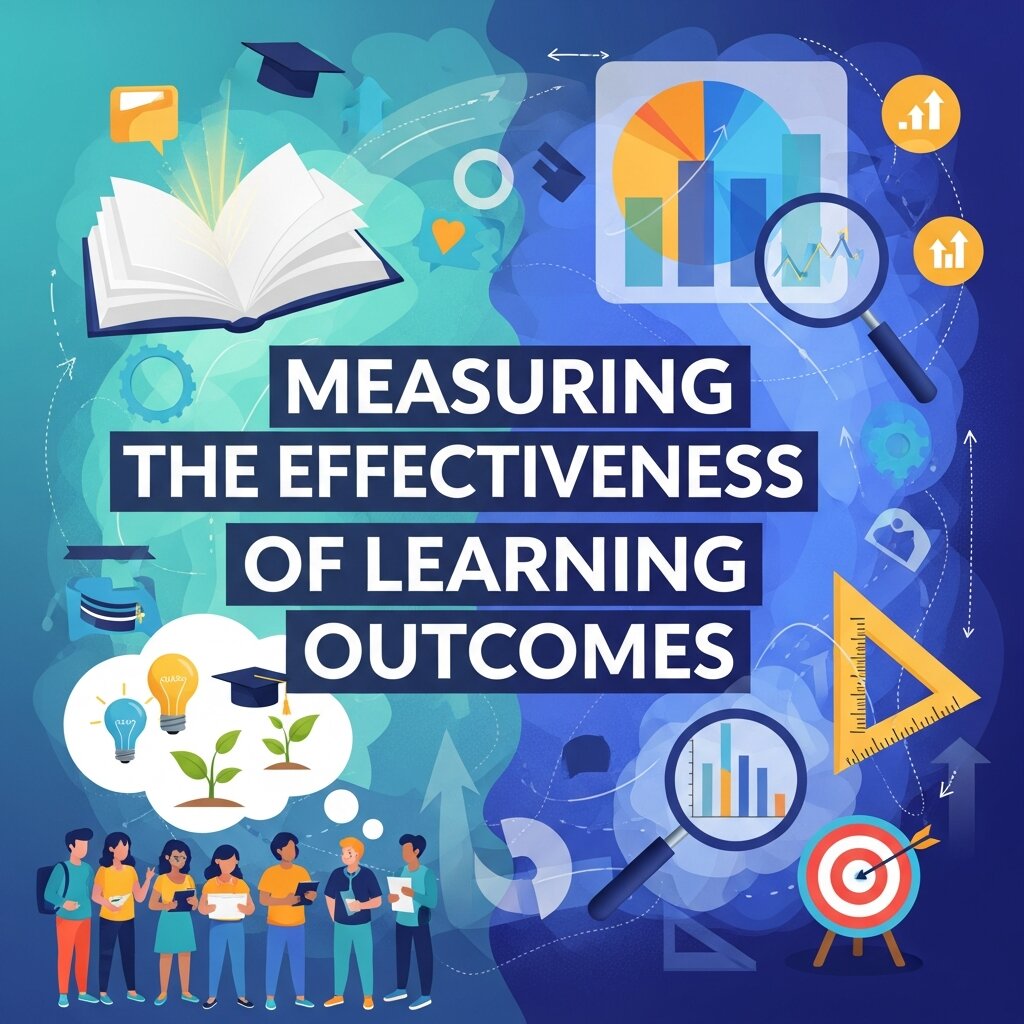 Creating learning outcomes is only the first step; evaluating whether they are achieved is equally important. Educators can measure learning outcomes through quizzes, assignments, projects, presentations, practical exercises, and performance-based assessments. These evaluation methods provide valuable insights into whether students have successfully developed the intended knowledge and skills.
Regular assessment data also helps instructors improve course quality over time. If many students struggle to achieve a particular outcome, educators can revise instructional materials, adjust teaching strategies, or redesign assessments to better support learning. In online education, learning analytics and digital assessment tools make it easier to monitor student performance continuously, enabling institutions to refine courses and deliver more effective, learner-centered educational experiences.
Frequently Asked Questions (FAQ)
1. What are learning outcomes?
Learning outcomes are clear, measurable statements that describe what learners should know, understand, or be able to do after completing a course or lesson. They help guide instruction, assessments, and student expectations throughout the learning process.
2. Why are learning outcomes important in online education?
Learning outcomes provide structure and direction for online courses by clearly defining expected skills and knowledge. They improve student engagement, support meaningful assessments, and help learners track their progress while staying focused on course objectives.
3. What is the difference between learning outcomes and learning objectives?
Learning objectives describe what instructors plan to teach, while learning outcomes focus on what students can demonstrate after learning. Outcomes are learner-centered, measurable, and directly connected to assessments that evaluate skill development and knowledge acquisition.
4. How do learning outcomes improve course design?
Learning outcomes help educators organize course content, learning activities, and assessments around specific goals. This creates a well-structured learning experience where every lesson contributes to measurable student achievements and supports better educational outcomes.
5. How can educators write effective learning outcomes?
Educators should use clear action verbs, focus on measurable skills, and ensure outcomes are realistic and achievable. Frameworks like Bloom’s Taxonomy help create outcomes that align with different cognitive levels and meaningful assessment strategies.
6. How do learning outcomes benefit students?
Learning outcomes give students a clear understanding of what they are expected to achieve. They increase motivation, improve self-assessment, reduce uncertainty, and help learners develop practical skills that can be applied in academic and professional settings.
7. What role do learning outcomes play in mobile learning apps?
Learning outcomes help mobile learning apps organize lessons into focused, achievable goals. They enable learners to master one skill at a time while allowing platforms to measure progress, personalize content, and improve overall learning effectiveness.
8. How does AI in education support learning outcomes?
AI-powered learning platforms analyze student performance against specific learning outcomes and personalize learning paths. They provide targeted feedback, recommend additional resources, and adjust course difficulty to improve student understanding and long-term retention.
9. How many learning outcomes should a course include?
Most courses work best with five to eight well-defined learning outcomes. Keeping outcomes focused and measurable helps educators design effective lessons while making it easier for students to understand expectations and demonstrate their learning.
10. Can learning outcomes improve career readiness?
Yes. Learning outcomes focus on developing measurable knowledge and practical skills that employers value. They help learners demonstrate competencies, build confidence, and connect academic achievements with real-world workplace expectations, improving long-term career opportunities.
From Outcomes to Impact: Making Online Learning Count
Learning outcomes do more than organize a course—they create accountability. For the learner, they define success. For the educator, they define purpose. For the institution, they define value.
As online education continues to grow across higher education, mobile learning apps, and AI-powered platforms, the courses that stand apart will be those built with intention.