Think back to how you learned your most useful skills. Some came from classrooms, textbooks, and structured courses. Others came from watching a YouTube tutorial at midnight, chatting with a mentor, or simply figuring things out as you went. That contrast sits at the heart of one of education’s most important conversations: formal vs informal learning.
For decades, formal education held the spotlight. Degrees, certificates, and structured curricula were the gold standard for proving what someone knew. But the way people gain knowledge has shifted dramatically. Online platforms, AI tools, and social communities now offer learning experiences that are flexible, personal, and often free. Suddenly, the line between “real” education and casual learning has blurred.
So which approach actually works better? The short answer is that both do—just in different ways. This post breaks down what formal and informal learning really mean, the unique benefits each one brings, and how blending the two creates a richer, more effective education for students, professionals, and lifelong learners alike.
What Is Formal Learning?
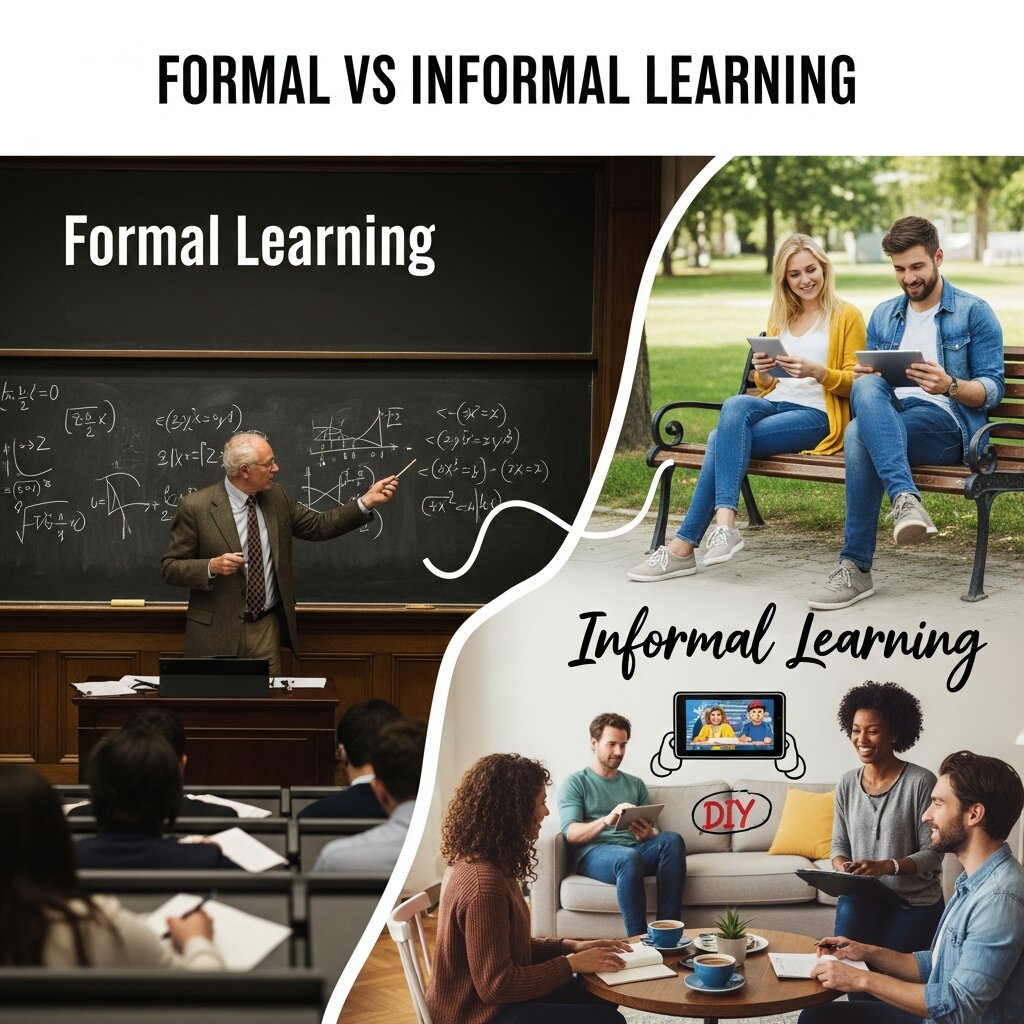
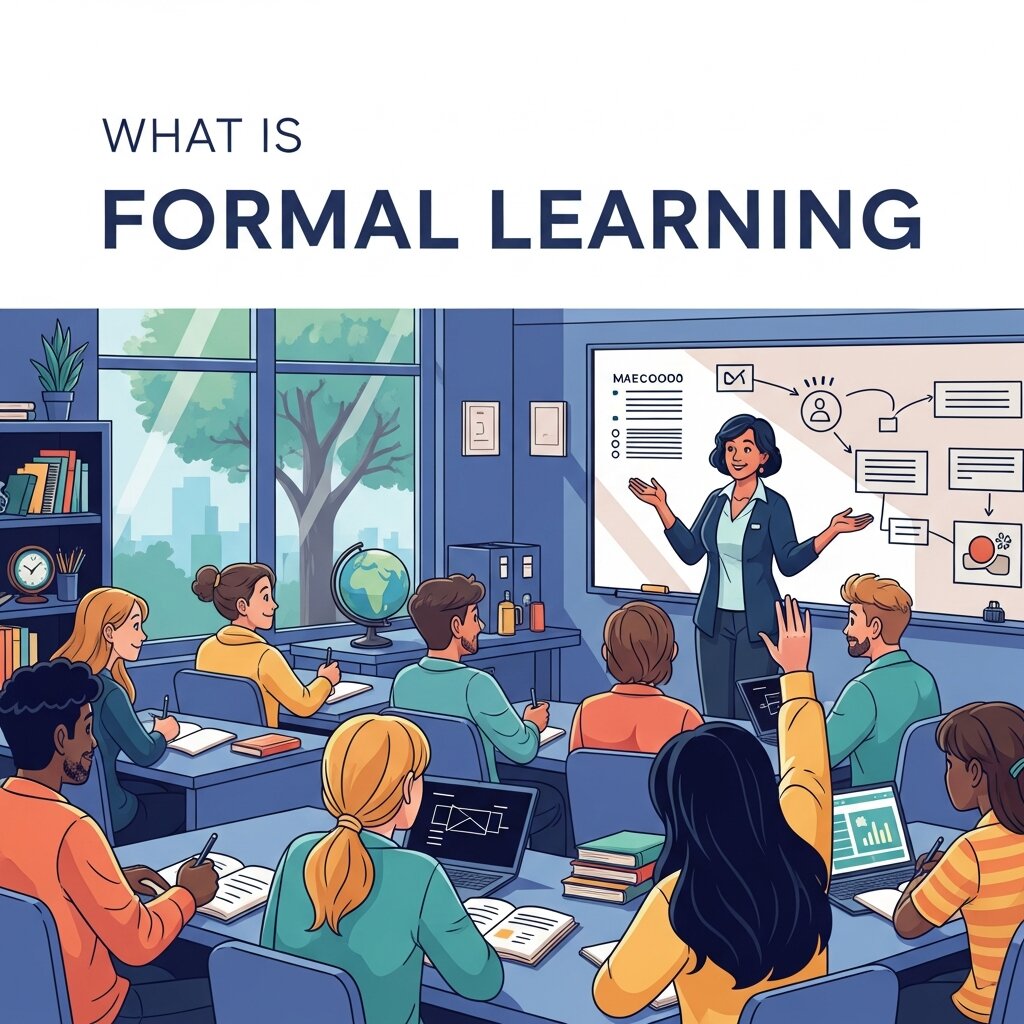 Formal learning is structured, organized, and intentional. It usually takes place in schools, universities, or accredited training programs, and it follows a defined curriculum with clear goals. At the end, you typically earn something tangible—a grade, a diploma, or a professional certification.
This type of learning is led by qualified instructors and measured through assessments like exams, essays, and projects. A university degree, a corporate compliance course, and a coding bootcamp are all examples of formal learning. The common thread is that someone designed the path in advance, and progress is tracked from start to finish.
The strength of formal learning lies in its credibility and consistency. Because the content is standardized, everyone who completes a program covers the same core material. That makes it easy for employers, schools, and licensing bodies to trust what a credential represents.
What Is Informal Learning?
Informal learning happens outside structured settings. It’s often spontaneous, self-directed, and driven by curiosity rather than a syllabus. You decide what to learn, when to learn it, and how deep to go.
Watching a documentary, reading articles, listening to podcasts, or experimenting with a new hobby all count as informal learning. So does asking a colleague how they solved a problem or troubleshooting your way through a software glitch. There’s no exam at the end—just the practical knowledge you walk away with.
What makes informal learning so powerful is its flexibility. It molds itself to your interests, schedule, and pace. You’re not waiting for the next semester or paying tuition; you’re learning in real time, exactly when the need or curiosity strikes.
Formal vs Informal Learning: The Key Differences
Understanding how these two styles differ helps you decide when to lean on each one.
- Structure: Formal learning follows a fixed curriculum, while informal learning is shaped entirely by the learner.
- Recognition: Formal learning leads to recognized credentials. Informal learning rarely comes with a certificate, though the skills can be just as valuable.
- Cost: Formal education often carries significant tuition fees. Informal learning is frequently free or low-cost.
- Pace: Formal programs run on set schedules and deadlines. Informal learning moves at whatever speed suits you.
- Assessment: Formal learning measures progress through tests and grades. Informal learning measures success by whether you can actually apply what you learned.
Neither approach is inherently better. They simply serve different purposes, and the smartest learners know how to combine them.
The Benefits of Formal Learning
 Formal education offers advantages that are hard to replicate through casual study alone.
Credibility and Career Access
Many careers still require formal qualifications. Doctors, engineers, lawyers, and accountants all need accredited degrees and licenses before they can practice. A formal credential signals to employers that you’ve met a recognized standard, which can open doors that informal experience alone might not.
Structured Progression
A well-designed curriculum builds knowledge in a logical order. You start with fundamentals and move toward advanced concepts, with each stage preparing you for the next. This scaffolding is especially valuable for complex subjects like medicine, mathematics, or law, where skipping steps can leave dangerous gaps.
Expert Guidance and Feedback
In formal settings, instructors guide you, answer questions, and correct mistakes before they become habits. Regular assessments show you exactly where you stand and what you need to improve. That feedback loop is tough to recreate on your own.
Networking and Community
Schools and training programs bring people together. The classmates, professors, and alumni you meet can become lifelong professional contacts. For many graduates, these connections prove just as valuable as the diploma itself.
The Benefits of Informal Learning
Informal learning has surged in popularity, and for good reason. It fits the way modern life actually works.
Flexibility and Accessibility
You can learn almost anything, anywhere, often for free. A smartphone and an internet connection give you access to lectures from top universities, expert tutorials, and global communities. This accessibility removes many of the financial and geographic barriers that formal education can impose.
Real-World Relevance
Informal learning tends to be immediately practical. When you teach yourself a new tool because your job demands it, you apply that knowledge right away. There’s no gap between learning and doing, which often makes the lessons stick.
Personalized Pace and Focus
You control the experience entirely. If a concept clicks quickly, you move on. If it doesn’t, you can pause, rewatch, and dig deeper without holding anyone back or falling behind. This self-directed style respects how individuals actually absorb information.
The Rise of Social Media for Education
Social media for education has transformed how people share and discover knowledge. Platforms like YouTube, LinkedIn, TikTok, and Reddit host an enormous library of explainer videos, expert threads, and peer discussions. A quick search can connect you with communities of learners tackling the same challenges you face.
These spaces also make learning collaborative. You can ask questions, debate ideas, and learn from people across the world—all without ever stepping into a classroom. When used intentionally, social media becomes a surprisingly effective informal classroom.
How Technology Is Blurring the Lines
The gap between formal and informal learning is shrinking fast, largely thanks to technology. Tools that once felt casual are now powerful enough to support serious study.
The Self Learning AI Chatbot Revolution
A self learning AI chatbot can now act like a personal tutor available around the clock. Ask it to explain a tricky concept, quiz you on a topic, or break down a complex idea into simpler terms, and it responds instantly. These tools adapt to your questions, offering tailored explanations that feel closer to one-on-one instruction than a static textbook ever could.
This blend of self-direction and intelligent guidance captures the best of both worlds. You get the flexibility of informal learning paired with feedback that mimics the structure of a formal classroom. For students stuck on homework or professionals upskilling after hours, an AI tutor fills gaps that traditional education often leaves open.
Blended and Hybrid Models
Many institutions now combine structured coursework with informal resources. A university course might assign online videos, encourage students to join discussion forums, and supplement lectures with interactive apps. This hybrid approach recognizes that learning doesn’t have to happen in a single, rigid format.
Corporations are doing the same. A formal training program might be reinforced with informal “lunch and learn” sessions, peer mentoring, and on-demand video libraries. The result is a more complete learning experience that meets employees where they are.
Combining Both for Maximum Impact
 The real magic happens when formal and informal learning work together. Each one fills the other’s gaps.
Imagine a marketing professional who earns a formal certification in digital strategy. The course gives them a solid foundation and a respected credential. But the field changes weekly, so they also follow industry leaders on social media, listen to podcasts, and experiment with new tools. The formal training provides the framework; the informal learning keeps it current.
This is also where an e-learning consultant can add real value. An e-learning consultant helps organizations design learning programs that blend structured courses with informal resources, ensuring employees get both credibility and flexibility. By mapping out which skills need formal certification and which can be developed through self-directed study, these specialists build training systems that are efficient and genuinely effective.
For individual learners, the strategy is similar. Use formal education to build foundations and earn credentials that matter for your goals. Then lean on informal learning to stay current, explore passions, and apply your knowledge in the real world. Together, they create a cycle of continuous growth that neither could achieve alone.
Frequently Asked Questions
1. What is the difference between formal and informal learning?
Formal learning follows a structured curriculum, defined objectives, and recognized assessments, often leading to certifications or degrees. Informal learning is self-directed, flexible, and typically occurs through everyday experiences, online resources, conversations, and personal exploration without formal credentials.
2. Which is better: formal learning or informal learning?
Neither approach is universally better. Formal learning provides structure, credibility, and expert guidance, while informal learning offers flexibility and practical application. The most effective learning strategy often combines both methods to maximize knowledge, skill development, and adaptability.
3. Can informal learning be as valuable as formal education?
Yes. Informal learning can develop highly practical and relevant skills that are immediately applicable in real-world situations. While it may not provide official credentials, it often helps individuals stay current with industry trends and emerging technologies.
4. What are some examples of formal learning?
Examples include university degree programs, professional certifications, corporate training courses, vocational education, workshops with assessments, and accredited online learning programs. These experiences follow structured curricula and often include evaluations or examinations.
5. What are common examples of informal learning?
Informal learning includes reading books, watching educational videos, listening to podcasts, participating in online communities, learning through workplace experience, mentoring relationships, attending webinars, and using digital resources to explore topics independently.
6. How has technology changed informal learning?
Technology has made learning more accessible than ever. Online courses, educational videos, AI-powered tools, mobile apps, and social media platforms allow people to gain knowledge anytime, anywhere, often at little or no cost.
7. Do employers value informal learning?
Many employers appreciate candidates who actively pursue continuous learning. Demonstrating practical skills, industry knowledge, and self-motivation through informal learning can strengthen your professional profile, especially when combined with relevant formal qualifications.
8. Can social media be used as an educational tool?
Yes. Social media platforms provide access to industry experts, educational content, professional communities, and discussions. When used strategically, they can support skill development, networking opportunities, and ongoing knowledge acquisition across various fields.
9. What role does AI play in modern learning?
Artificial intelligence can personalize learning experiences, provide instant feedback, answer questions, generate practice materials, and act as a virtual tutor. AI tools help learners study more efficiently and access information whenever they need assistance.
10. How can I combine formal and informal learning effectively?
Start with formal education to build a strong foundation and earn recognized credentials. Then use informal learning methods such as books, online resources, podcasts, professional communities, and AI tools to stay updated and continuously expand your knowledge and skills.
Building a Smarter Approach to Learning
Formal and informal learning aren’t rivals—they’re partners. Formal education delivers structure, credibility, and expert guidance, while informal learning offers flexibility, relevance, and freedom. Leaning too heavily on just one means missing out on what the other does best.
The most effective learners build a personal mix of both. They pursue degrees and certifications when credentials count, then turn to social media, AI tutors, and self-directed study to fill in the rest. As technology continues to dissolve the boundary between these two worlds, the opportunities to learn have never been richer.