The leap from high school to a university environment represents one of the most significant transitions a student will ever make. This shift requires more than just a higher level of intelligence or a broader base of knowledge. It demands an entirely new set of study habits, emotional maturity, and technological proficiency. Students who arrive on a college campus without these fundamental skills often find themselves overwhelmed by the rigorous demands of higher studies.
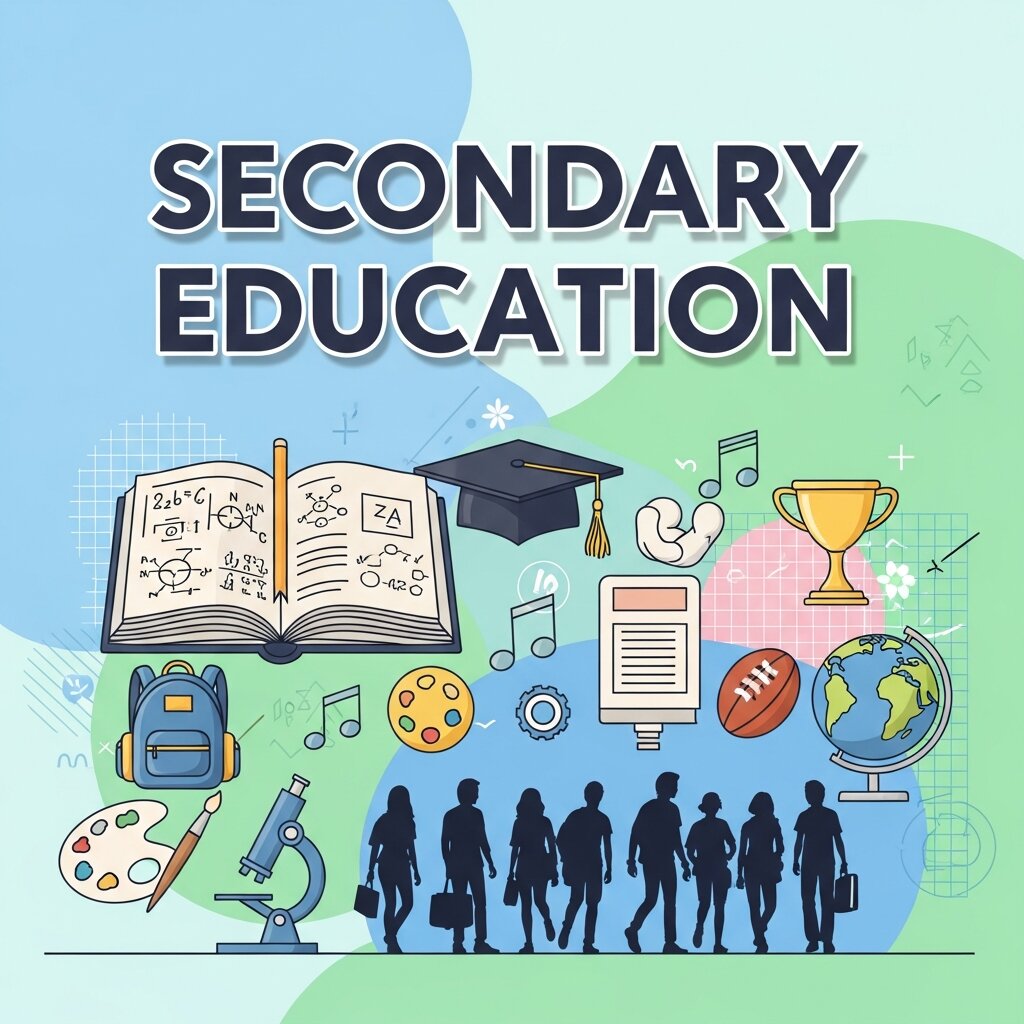
Secondary education serves as the critical bridge between the foundational learning of elementary school and the specialized, autonomous environment of a university. During these pivotal years, students are not simply memorizing facts. They are learning how to learn, how to manage their time, and how to interact with increasingly complex academic material. A robust secondary education program anticipates the challenges of college and systematically exposes students to the pressures and expectations they will eventually face.
Understanding the specific mechanisms through which secondary education prepares students for higher studies is vital for educators, parents, and policymakers. By examining the academic, personal, and technological developments that occur during high school, we can better appreciate the value of these formative years. This comprehensive guide explores the multifaceted ways in which a strong secondary education equips students for success in higher education, highlighting core academic competencies, emotional growth, and the integration of modern digital tools.
Developing Core Academic Competencies
 At its heart, secondary education focuses on building a deep reservoir of academic skills. University coursework assumes a baseline of literacy, numeracy, and analytical capability that must be established during the high school years.
Advanced Literacy and Numeracy Skills
Higher education requires students to consume massive amounts of information quickly and accurately. College-level reading assignments are dense, featuring complex vocabulary and sophisticated arguments. Secondary education prepares students for this reality by gradually increasing the difficulty of assigned texts. English and literature classes transition from basic reading comprehension to deep literary analysis. Students learn to identify themes, evaluate arguments, and synthesize information from multiple sources.
Similarly, mathematical proficiency is essential for a wide range of college majors, from the hard sciences to economics and psychology. High school math sequences—moving from algebra to calculus and statistics—train the brain to think logically and sequentially. These courses teach students how to approach abstract problems, a skill that translates across disciplines. By the time students graduate, they should possess the quantitative literacy necessary to understand statistical research, manage complex equations, and apply mathematical concepts to real-world scenarios.
Critical Thinking and Analytical Reasoning
Memorization might help a student pass a middle school history test, but it will not carry them through a college seminar. University professors expect students to analyze information, question assumptions, and formulate original ideas. Secondary education actively cultivates these critical thinking skills through research papers, laboratory experiments, and classroom debates.
When a high school student writes a research paper, they must evaluate the credibility of their sources, organize their thoughts coherently, and defend their thesis with evidence. Science labs teach the scientific method, encouraging students to form hypotheses, conduct tests, and interpret data. These exercises move students away from passive reception of information and toward active intellectual engagement. They learn that knowledge is not static but rather something that must be constantly questioned, tested, and expanded.
Cultivating Independent Learning and Time Management
Academic skills alone are insufficient for college success. The structure of a university day is vastly different from that of a high school. Students must learn to navigate this newfound freedom effectively.
The Shift from Guided to Autonomous Study
In early education, teachers closely monitor student progress, offering frequent reminders about due dates and providing highly structured study guides. Secondary education begins to dismantle this scaffolding. High school teachers assign long-term projects, expect students to complete reading assignments independently, and hold them accountable for their own test preparation.
This gradual release of responsibility forces students to develop their own study strategies. They must figure out whether they retain information better through outlining text, forming study groups, or using flashcards. They learn how to break large assignments into manageable chunks and how to prioritize tasks when multiple deadlines loom. This autonomy is a direct rehearsal for college, where a professor may only grade a mid-term and a final exam, leaving the entirety of the study process up to the student.
Managing Extracurriculars and Academics
Secondary education is also a time when students heavily engage in extracurricular activities—sports, theater, debate club, or part-time jobs. Balancing these commitments with a rigorous academic workload teaches invaluable time management skills.
A student who must attend basketball practice until 6:00 PM and still complete three hours of homework learns how to maximize their efficiency. They learn to utilize free periods during the school day, minimize distractions during study hours, and sacrifice short-term leisure for long-term goals. Universities value students who have demonstrated this ability to juggle multiple responsibilities, as campus life is filled with academic, social, and professional opportunities competing for a student’s attention.
The Impact of Modern Technology on Secondary Education
 The landscape of learning has changed dramatically over the last decade. A modern secondary education must incorporate digital literacy and advanced learning technologies to ensure students are prepared for a tech-driven collegiate environment.
Integrating AI in Education
Artificial intelligence is rapidly reshaping how information is delivered and consumed. Implementing AI in education at the secondary level helps students become familiar with the tools they will inevitably use in college and their future careers. AI-driven platforms can analyze a student’s performance in real-time, identifying areas where they struggle and automatically adjusting the curriculum to provide targeted practice.
This personalized learning approach not only improves academic outcomes but also teaches students how to interact with intelligent algorithms. By experiencing adaptive learning platforms in high school, students learn to view technology as an active partner in their education rather than just a passive repository of information.
Leveraging a Consultant E Learning Professional
Many high schools are overhauling their digital infrastructure to better mimic the university experience. To accomplish this, school districts often partner with a consultant e learning specialist. These professionals design virtual learning environments, implement learning management systems (LMS) like Canvas or Blackboard, and train teachers on digital pedagogy.
Because universities heavily rely on these digital platforms for course materials, assignment submissions, and peer discussions, early exposure is crucial. Students who navigate these systems effectively during their secondary education face a much smoother transition to college. They already understand how to participate in online forums, access digital reserves, and troubleshoot basic technical issues, allowing them to focus entirely on the academic content.
The Rise of the Self Learning AI Chatbot
Another technological advancement preparing students for higher studies is the integration of the self learning ai chatbot into high school support systems. These chatbots provide 24/7 assistance, answering questions about homework assignments, scheduling, and study resources.
Interacting with a self learning ai chatbot teaches students how to formulate precise questions and seek out automated assistance effectively. In large university settings, where direct access to professors may be limited, students often rely on similar digital assistants for library research or administrative support. Getting comfortable with these self-guided inquiry tools during high school fosters a sense of resourcefulness and technological fluency.
Social and Emotional Preparation for Higher Ed
The academic rigor of higher education is matched by its emotional demands. Leaving home, navigating complex social dynamics, and handling academic setbacks require a high degree of emotional intelligence and resilience.
Building Resilience and Adaptability
High school is a safe environment for students to experience failure and learn how to recover. A poor grade on a math test or a rejection from a sports team can feel devastating, but secondary education provides the support systems—counselors, teachers, and parents—to help students process these setbacks.
Learning how to accept constructive criticism and bounce back from disappointment is essential for college. University courses are inherently difficult, and even high-achieving students will likely encounter academic hurdles. Students who have developed resilience during their secondary education understand that a bad grade is not a permanent reflection of their intelligence, but rather feedback indicating a need to change their study habits.
Collaborative Learning and Peer Interaction
Higher studies heavily feature collaborative work. Seminars require active participation, and many courses assign group projects that mimic professional environments. Secondary education prepares students for this by embedding collaborative learning into the curriculum.
Through group presentations, peer review sessions, and team-based lab work, students learn how to communicate effectively, resolve conflicts, and leverage the diverse strengths of their peers. They learn the importance of active listening and the etiquette of academic disagreement. These social skills are vital for building study networks in college and fostering productive relationships with professors and classmates.
Career Exploration and Academic Specialization
While high school provides a general education, the later years of secondary education offer opportunities for students to explore specific interests, helping them make informed decisions about their college majors and future careers.
Electives and Specialized Tracks
Many high schools offer elective courses in subjects like computer science, psychology, economics, and graphic design. Some even provide specialized tracks or vocational programs that allow for deep dives into specific industries. This exposure is incredibly valuable. A student might discover a passion for coding through an introductory computer science elective, prompting them to pursue a degree in software engineering. Conversely, a student might realize that a subject they thought they would love is not the right fit for them, saving them valuable time and tuition money in college.
Advanced Placement (AP) and International Baccalaureate (IB) courses serve a similar function. These college-level classes challenge students with rigorous material and offer a realistic preview of university academics. Success in these courses builds confidence and provides a tangible measure of a student’s readiness for higher studies.
Counseling and College Readiness Programs
Guidance counselors play a critical role in secondary education by helping students navigate the complex college admissions process. They assist with course selection, standardized test preparation, and college essays. More importantly, they help students match their academic profiles and personal interests with appropriate universities.
College readiness programs often include workshops on financial literacy, campus life, and academic expectations. These programs demystify the university experience, reducing anxiety and giving students a clear roadmap for what to expect during their freshman year.
FAQ: Secondary Education
1. How does secondary education help students succeed in university?
Secondary education builds essential skills like critical thinking, time management, and independent learning. These abilities directly match the expectations of university-level coursework.
2. What academic skills are most important for higher education?
Core skills include advanced literacy, numeracy, analytical reasoning, and research ability. High school gradually develops these through essays, math progression, and science experiments.
3. Why is time management so important during secondary education?
High school trains students to balance homework, exams, and extracurricular activities. This prepares them for college life, where students must manage their own schedules with less supervision.
4. How does technology in secondary education prepare students for college?
Tools like learning management systems, AI-based learning platforms, and digital classrooms help students become comfortable with the same technologies widely used in universities.
5. What role do extracurricular activities play in college preparation?
Extracurriculars teach discipline, leadership, teamwork, and responsibility. They also help students manage multiple priorities—an essential skill for higher studies.
6. What is the purpose of AP or IB courses in high school?
AP and IB courses simulate college-level academic difficulty. They help students experience advanced coursework early and build confidence for university studies.
7. How do counselors support students during secondary education?
Counselors guide students in course selection, career planning, exam preparation, and college applications, making the transition to higher education smoother.
8. Why is emotional resilience important for college readiness?
University life involves academic pressure and independence. High school helps students learn how to handle failure, accept feedback, and recover from setbacks.
9. How does group work in high school prepare students for university?
Group projects teach communication, collaboration, and conflict resolution—skills commonly required in university assignments and professional environments.
10. What is the biggest difference between secondary school and university learning?
The biggest difference is independence. In university, students are responsible for their own learning, while secondary education provides more structure and guidance.
Preparing for the Future of Higher Education
 Secondary education is far more than a waiting room for adulthood. It is a dynamic, complex training ground that actively shapes a student’s intellectual and emotional capacity. From the mastery of advanced literacy to the cultivation of resilience and the adoption of cutting-edge technology, the high school years lay the necessary groundwork for future academic success.
As higher education continues to evolve—becoming more digital, more global, and more rigorous—secondary schools must continually adapt their methods. By focusing on critical thinking, autonomous study habits, and technological fluency, educators ensure that students are not merely surviving the transition to college but are poised to thrive in the demanding environment of higher studies. A solid foundation built during these crucial years guarantees that when a student steps onto a university campus, they are ready to face the challenges ahead.