Education is no longer limited to traditional classrooms, textbooks, and fixed schedules. Digital platforms now allow teachers and students to communicate, access resources, complete assignments, and learn from almost anywhere.
Online learning tools have become an important part of this transformation. They can support classroom instruction, remote learning, professional development, self-paced study, and collaborative projects.
From virtual classrooms and learning management systems to AI-powered assistants and mobile learning apps, modern technology gives educators more ways to teach and students more ways to learn.
What Are Online Learning Tools?
Online learning tools are digital platforms, applications, and resources designed to support teaching and learning through the internet.
These tools can help users create lessons, share educational materials, communicate with classmates, complete assignments, take assessments, and monitor academic progress.
Some tools are designed specifically for teachers, while others focus on students or provide features for both groups. Many platforms combine several functions into a single learning environment.
The growing availability of these tools has made digital education more flexible and accessible for schools, universities, training organizations, and individual learners.
Why Online Learning Tools Matter in Modern Education
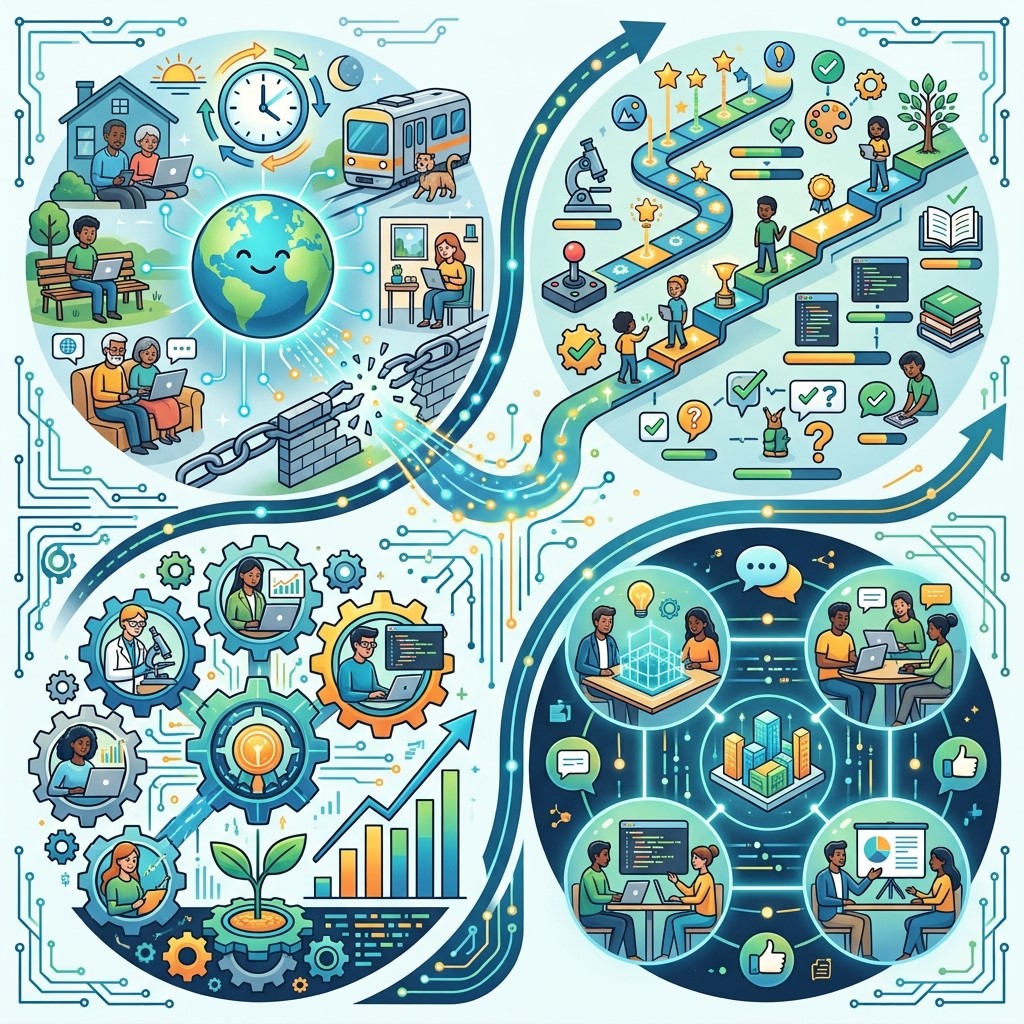 Traditional teaching methods remain valuable, but digital tools can extend what educators and students can accomplish.
Teachers can use technology to organize materials, communicate with learners, and create interactive activities. Students can access resources outside regular class hours and review difficult topics at their own pace.
Technology can also support different learning preferences. Students may learn through videos, interactive exercises, written resources, simulations, discussions, and quizzes.
When used thoughtfully, online tools can complement traditional teaching rather than simply replace it.
How Online Learning Tools Help Teachers
Simplify Lesson Planning
Teachers often spend significant time preparing lessons, organizing resources, creating activities, and developing assessments.
Digital tools can make these tasks more manageable by providing templates, content libraries, interactive resources, and organizational features.
Educators can prepare materials in advance and make them available to students through a centralized platform.
This can reduce administrative work and give teachers more time to focus on instruction and student support.
Improve Classroom Organization
Online learning platforms can help teachers organize assignments, learning materials, deadlines, announcements, and student activities.
Instead of distributing information through multiple channels, educators can create a structured digital environment where students know where to find important resources.
Better organization can reduce confusion and help students develop stronger study habits.
Support Communication
Communication is an essential part of successful education. Online tools allow teachers to communicate with students through announcements, discussion boards, messaging systems, video meetings, and feedback features.
These options can be especially useful when students need clarification outside regular classroom hours. Digital communication can also support collaboration between teachers, students, and parents when appropriate.
How Online Learning Tools Help Students

Enable Flexible Learning
Students have different schedules, responsibilities, learning speeds, and educational needs.
Online tools allow learners to access lessons and resources at convenient times. Recorded lectures, digital notes, practice exercises, and online courses can support learning beyond the classroom.
This flexibility can be particularly valuable for students balancing education with work, family responsibilities, or other commitments.
Encourage Self-Paced Learning
Not every student understands a topic at the same speed. Some learners may need additional explanations, while others may want to move ahead.
Digital learning platforms can support self-paced study by allowing students to revisit lessons, repeat exercises, and review difficult concepts. This can give learners greater control over their educational progress.
Provide Immediate Feedback
Many online learning tools include quizzes, assessments, and interactive exercises that provide immediate feedback.
Instead of waiting for a teacher to manually review every exercise, students can sometimes identify mistakes immediately.
Fast feedback can help learners understand difficult concepts and correct errors before they become long-term knowledge gaps.
The Role of Educational Technology
Create Interactive Learning Experiences
Educational Technology can make lessons more interactive through videos, simulations, games, digital whiteboards, virtual activities, and collaborative exercises.
Interactive content can encourage students to participate rather than simply consume information.
For example, a science lesson could use a simulation to demonstrate an experiment, while a language class could use interactive exercises to practice vocabulary.
Support Collaboration
Digital collaboration tools allow students to work together even when they are not physically in the same classroom.
Learners can collaborate on presentations, documents, research projects, and group discussions.
This can help students develop communication, teamwork, problem-solving, and digital collaboration skills that are valuable beyond education.
Improve Access to Resources
Educational technology can connect learners with a wide range of educational materials.
Students can access digital libraries, online courses, tutorials, research resources, videos, practice exercises, and other learning content.
This expanded access can help learners explore subjects beyond the resources available in their immediate classroom.
AI in Education
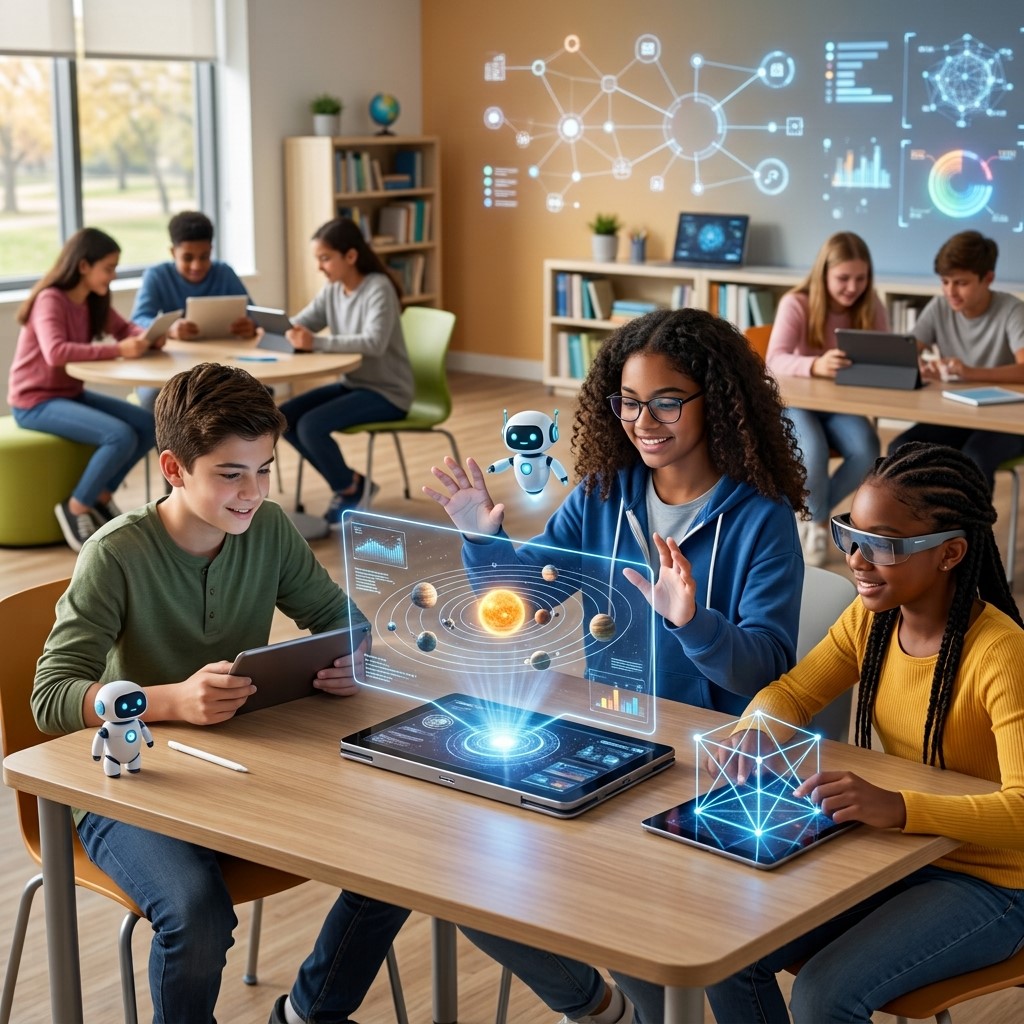
Personalize Learning Experiences
AI in Education is creating new opportunities for personalized learning.
AI-powered systems can analyze learning activity and provide recommendations based on a student’s progress. Some platforms can adjust exercises according to performance or provide additional explanations when students struggle.
Personalization can help students spend more time on areas where they need improvement.
Support Teachers With AI
AI can also assist educators with routine tasks such as generating lesson ideas, creating practice questions, summarizing information, and developing educational activities.
However, teachers should review AI-generated material carefully to ensure that it is accurate, appropriate, and aligned with learning objectives.
AI should support educators rather than remove the human judgment that is essential to effective teaching.
Provide AI-Powered Learning Assistance
Students can use AI-based tools to ask questions, receive explanations, practice concepts, or explore different approaches to a problem.
These systems can provide additional support when a teacher is not immediately available.
At the same time, students should use AI responsibly. Understanding concepts and developing independent thinking should remain more important than simply obtaining answers.
Mobile Learning Apps
Make Learning More Accessible
Mobile Learning Apps allow students to access educational content through smartphones and tablets.
Because mobile devices are widely used, learning apps can provide convenient access to lessons, quizzes, flashcards, videos, and study materials. Students can use these resources while commuting, during study breaks, or at home.
Support Short Learning Sessions
Mobile platforms are particularly useful for short learning activities. Students can complete vocabulary exercises, review flashcards, answer practice questions, or watch brief educational videos without needing a long uninterrupted study session. These small learning sessions can complement deeper classroom study.
Encourage Continuous Learning
Mobile learning can help students develop consistent study habits by making educational resources available throughout the day. Notifications, progress tracking, and daily activities can encourage learners to return regularly. However, notifications should be designed carefully so they support learning without becoming distracting.
Online Learning Tools for Remote Education

Support Virtual Classrooms
Virtual classroom platforms allow teachers and students to interact through live video sessions, digital presentations, chat, and screen sharing. These tools can help recreate many aspects of traditional classroom interaction in an online environment. Teachers can deliver lectures, answer questions, conduct discussions, and assign activities without requiring everyone to be physically present.
Provide Recorded Resources
Recorded lessons give students an opportunity to review material after a live session. Students who miss a class can also access recordings when available. This can make learning more flexible and help learners revisit complex topics multiple times.
Online Assessment and Evaluation
Create Digital Quizzes
Online quizzes can provide a convenient way to evaluate student understanding. Teachers can create multiple-choice questions, short-answer exercises, polls, and other assessment formats. Automated scoring can reduce grading time for certain types of assessments.
Track Student Progress
Learning platforms can collect information about assignment completion, quiz results, participation, and course progress. Teachers can use this information to identify students who may need additional support. Progress data can also help educators evaluate whether their teaching strategies are producing the desired outcomes.
Benefits for Educational Growth
Expand Learning Opportunities
Online tools make it easier for students to access educational resources beyond their local institutions. Learners can explore courses, tutorials, lectures, and resources from organizations and educators around the world. This can expand educational opportunities for students who may have limited access to specialized subjects locally.
Support Lifelong Learning
Education does not stop after graduation. Professionals and adults increasingly need to learn new skills throughout their careers. Online platforms can provide flexible courses and resources for professional development, certifications, technical skills, languages, and personal interests. This makes continuous learning more practical for people with busy schedules.
Reduce Certain Educational Barriers
Digital education can reduce barriers related to distance, scheduling, and access to physical materials. Students can often access learning resources without traveling to a specific location. However, digital education still depends on reliable internet access, suitable devices, and digital literacy, so technology alone cannot eliminate every educational barrier.
Choosing the Right Online Learning Tools
Identify Learning Objectives
The best tool depends on what you are trying to accomplish. A teacher looking for virtual classroom functionality needs different features from a student looking for language practice or exam preparation. Define the learning objective first and then evaluate tools based on how effectively they support that goal.
Evaluate Ease of Use
A powerful platform can become ineffective if students and teachers struggle to use it. Look for clear navigation, accessible features, simple interfaces, and useful support resources. Ease of use can improve adoption and reduce the amount of time spent learning the technology itself.
Consider Security and Privacy
Educational platforms may handle sensitive student information, so privacy and security should be important considerations. Schools and organizations should review data policies, account controls, permissions, and security practices before adopting a platform. Students and educators should also follow responsible digital practices when using online learning services.
Challenges of Online Learning Tools
Technology Dependence
Online learning depends on devices, software, electricity, and internet connectivity. Technical problems can interrupt lessons or prevent students from accessing important resources. Educational institutions should have backup plans and provide alternative resources when possible.
Digital Distractions
Students may face distractions from social media, entertainment, notifications, and unrelated websites while learning online. Teachers can help by designing focused activities and establishing clear expectations for digital learning. Students can also improve concentration by using dedicated study environments and limiting unnecessary notifications.
Maintaining Human Interaction
Technology cannot completely replace meaningful human interaction. Teachers provide encouragement, mentorship, emotional support, context, and professional judgment that automated systems cannot fully replicate. The strongest educational environments usually combine digital tools with effective human teaching.
Best Practices for Using Online Learning Tools
Keep Learning Goals Central
Technology should serve education rather than become the objective itself. Teachers should choose tools because they improve learning outcomes, simplify teaching, or provide valuable opportunities. Using too many platforms at once can create confusion and increase the digital workload for both teachers and students.
Encourage Responsible Technology Use
Students should understand how to use digital resources responsibly. This includes protecting personal information, respecting copyright, communicating appropriately, evaluating online information, and using AI tools ethically. Digital literacy is increasingly important as technology becomes more integrated into education.
Combine Different Learning Methods
A strong digital learning experience can combine videos, reading, discussion, practice, assessments, and real-world activities. Using different formats can support different learning preferences and keep students engaged. The goal should be meaningful learning rather than simply increasing the amount of digital content.
The Future of Online Learning Tools
Online learning will continue to evolve as artificial intelligence, cloud computing, mobile technology, immersive experiences, and data analytics become more advanced.
AI-powered personalization may make learning experiences increasingly adaptive, while mobile tools can make education more accessible across different environments.
At the same time, educators will continue to play a central role in guiding students, evaluating information, building critical thinking skills, and creating meaningful learning experiences. The future of education is likely to involve a combination of technology and human expertise rather than technology replacing teachers entirely.
Frequently Asked Questions
1. What are online learning tools?
Online learning tools are digital platforms, applications, and resources that support teaching and learning through the internet. They can help users access lessons, communicate, complete assignments, collaborate, practice skills, and evaluate progress.
2. How do online learning tools help teachers?
They can simplify lesson planning, organize learning materials, manage assignments, communicate with students, create assessments, and monitor progress. These features can reduce administrative work and give teachers more time to focus on instruction.
3. How do online learning tools benefit students?
Students can access educational resources flexibly, learn at their own pace, practice concepts, receive feedback, collaborate with classmates, and explore subjects beyond traditional classroom materials.
4. What is Educational Technology?
Educational Technology refers to the use of digital tools, software, platforms, devices, and technological methods to support teaching and learning. It can include learning management systems, virtual classrooms, educational apps, and digital assessment tools.
5. How is AI used in education?
AI in Education can support personalized learning, content recommendations, automated feedback, lesson preparation, educational assistance, and learning analytics. Teachers should review AI-generated information and use AI as a support tool rather than a complete replacement for human instruction.
6. What are Mobile Learning Apps?
Mobile Learning Apps are applications designed to provide educational content and activities through smartphones and tablets. They can support language learning, quizzes, flashcards, video lessons, skill development, and other learning activities.
7. Are online learning tools suitable for remote education?
Yes. Online learning tools can support virtual classrooms, video lessons, digital assignments, communication, assessments, and recorded educational content, making them useful for remote and hybrid learning environments.
8. How can teachers choose the right online learning tool?
Teachers should begin by identifying their learning objectives and then evaluate tools based on features, ease of use, accessibility, cost, security, compatibility, and student needs. A simple tool that supports the goal effectively may be better than an overly complex platform.
9. Can online learning tools replace teachers?
Online tools can support many teaching activities, but they cannot fully replace the guidance, mentorship, judgment, and human connection provided by teachers. Technology is most effective when it complements skilled educators.
10. What is the future of online learning?
The future will likely include more AI-powered personalization, mobile learning, interactive digital content, learning analytics, and flexible online education. Human teachers will remain important for guidance, critical thinking, collaboration, and meaningful educational experiences.
Conclusion
Online learning tools are changing how teachers teach and how students access and experience education. From digital classrooms and assessment platforms to AI-powered systems and mobile learning apps, technology provides new opportunities for flexibility, personalization, collaboration, and continuous learning.
Educational Technology can simplify teaching tasks, improve access to resources, and create more interactive experiences. AI in Education can support personalized learning and assist teachers with routine activities, while Mobile Learning Apps make educational resources available wherever students have compatible devices and connectivity.